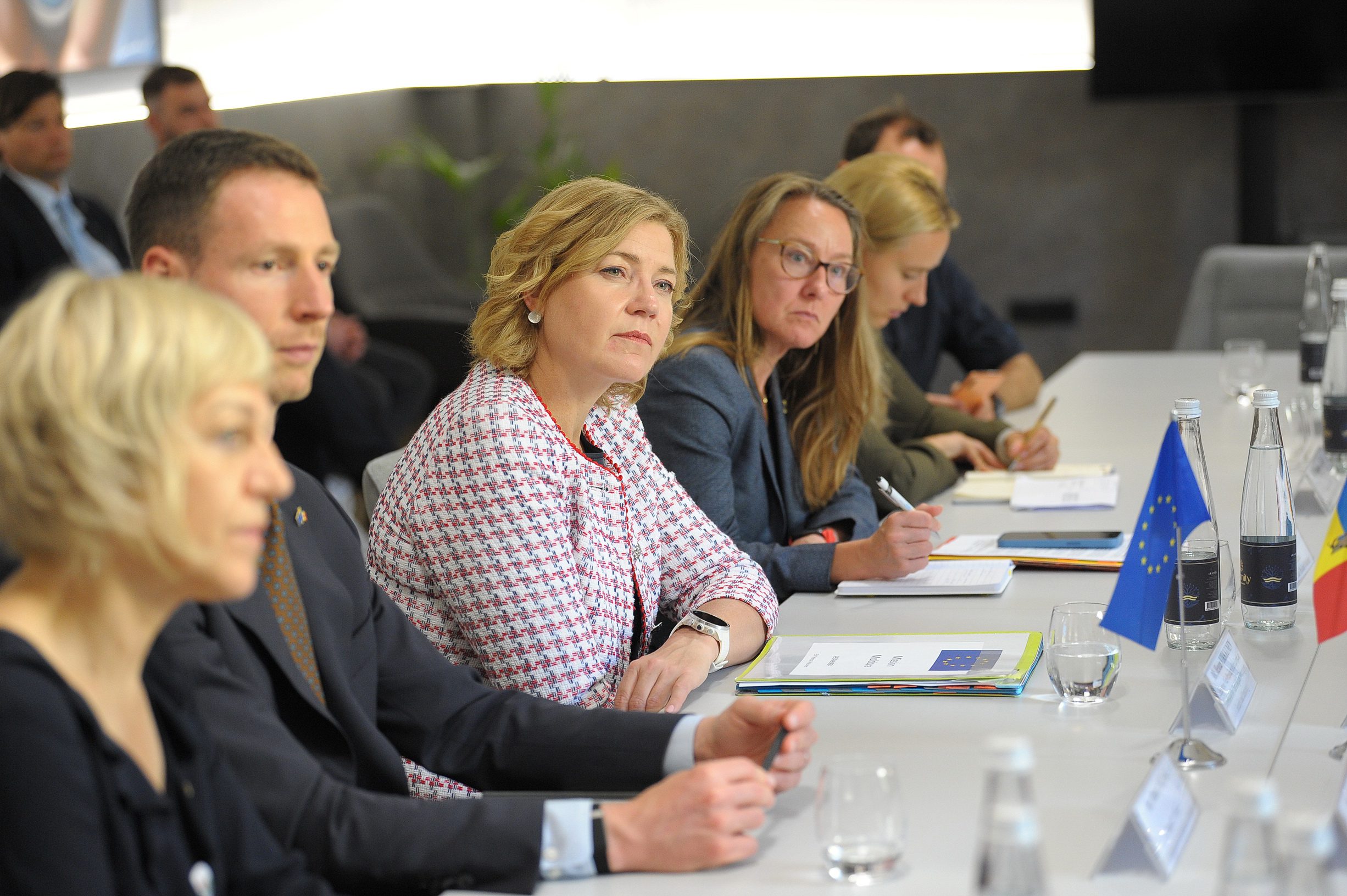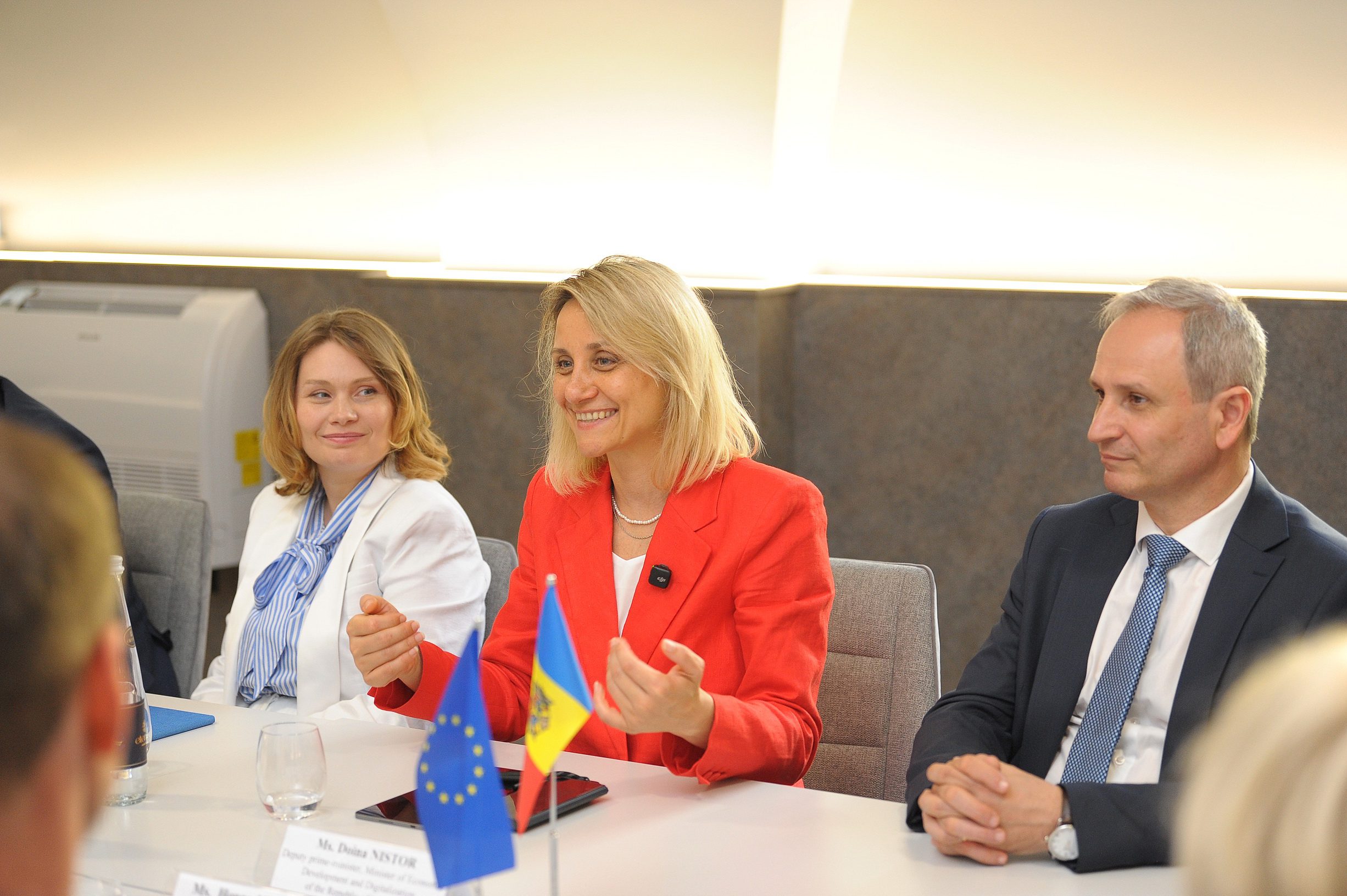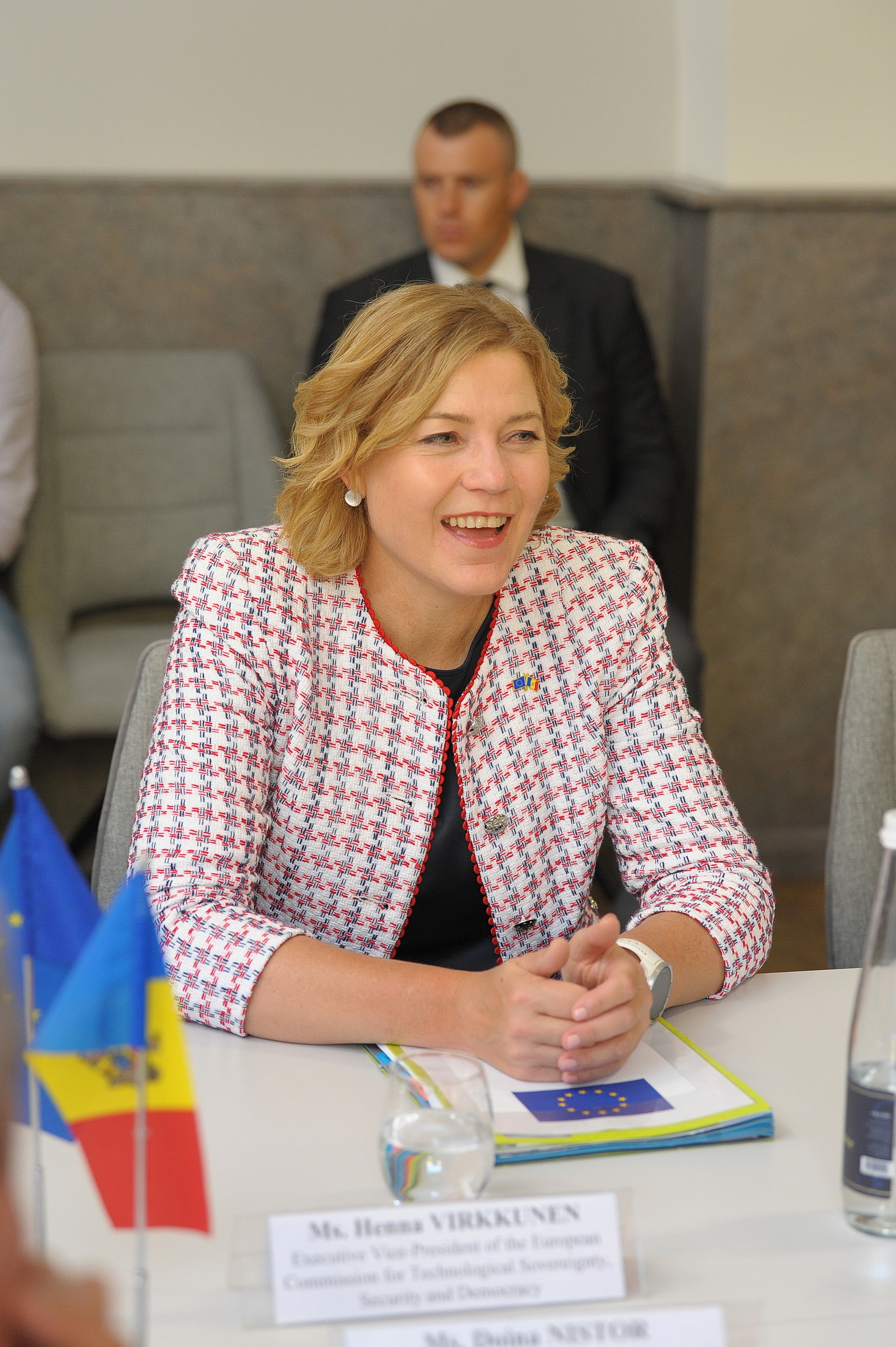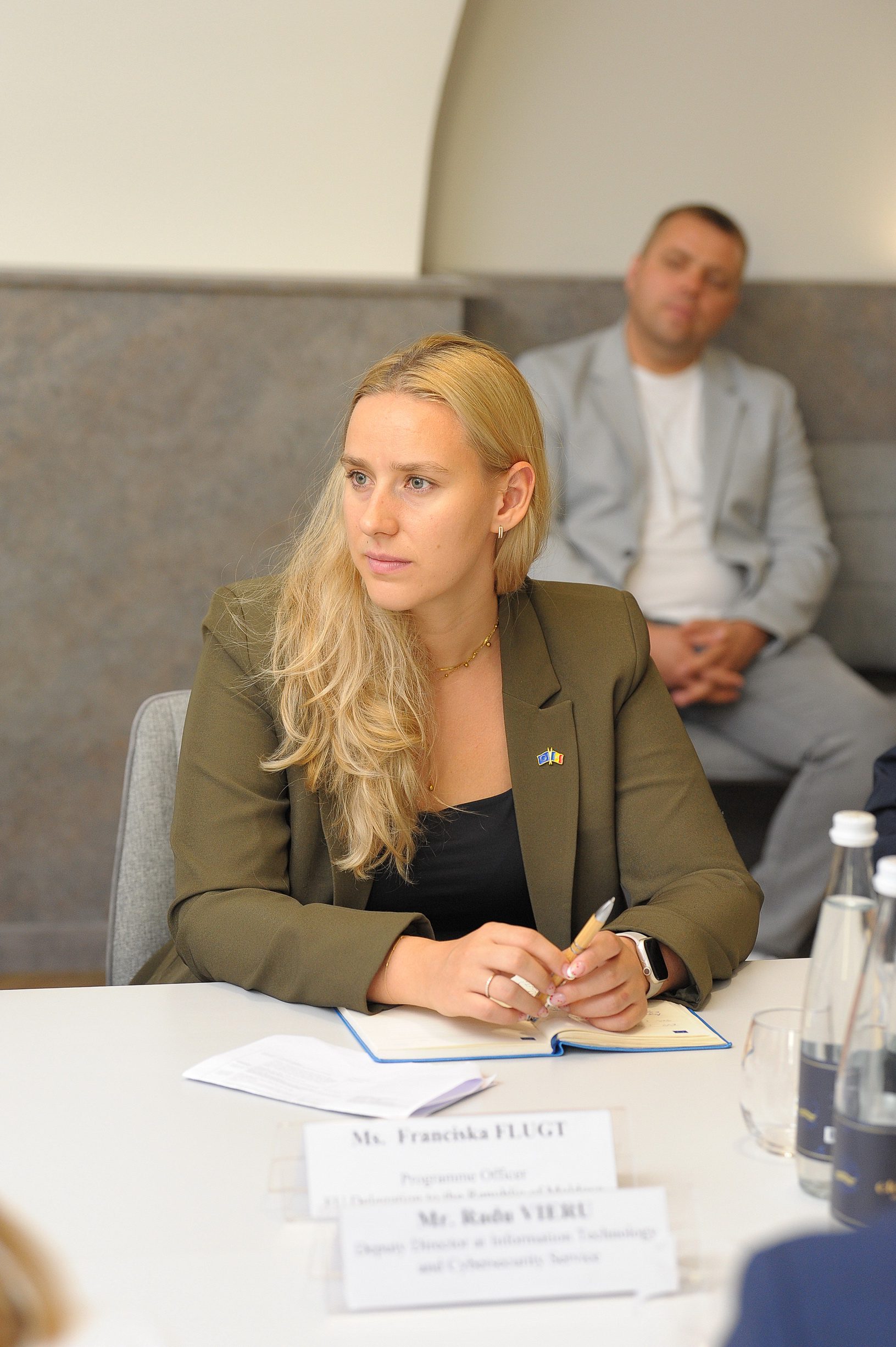






Today, the National Institute for Innovation in Cybersecurity – CYBERCOR, part of the Technical University of Moldova, hosted an event of international significance, marking an important step in strengthening Moldova’s position as a trusted partner in cybersecurity and European digital sovereignty. A high-level official delegation led by Henna VIRKKUNEN, Vice President of the European Commission for Technological Sovereignty, Security, and Democracy, visited the institute, highlighting the European Union’s commitment to supporting the development of Moldova’s cybersecurity capabilities.
The delegation from the Republic of Moldova, led by Doina NISTOR, Deputy Prime Minister and Minister of Economic Development and Digitalization, reflected the national strategic importance given to the digital domain and cybersecurity. The delegation included senior officials and top experts: Mihai LUPAȘCU, Director of the Cybersecurity Agency; Nicoleta COLOMEET, Director of the Electronic Governance Agency; Radu VIERU, Deputy Director of the Information Technology and Cybersecurity Service; Marina BZOVÎI, Administrator of the Moldova Innovation Technology Park; Anatolie GOLOVCO, Advisor to the Prime Minister on Cybersecurity; Michelle ILIEV, State Secretary for Digitalization and Innovation at the Ministry of Economic Development and Digitalization; Marius DUMITRAȘCU, Head of the Cybercor Department for Research and Education; and Denis SITARI, Deputy Director of the National Agency for Regulation in Electronic Communications and Information Technology.

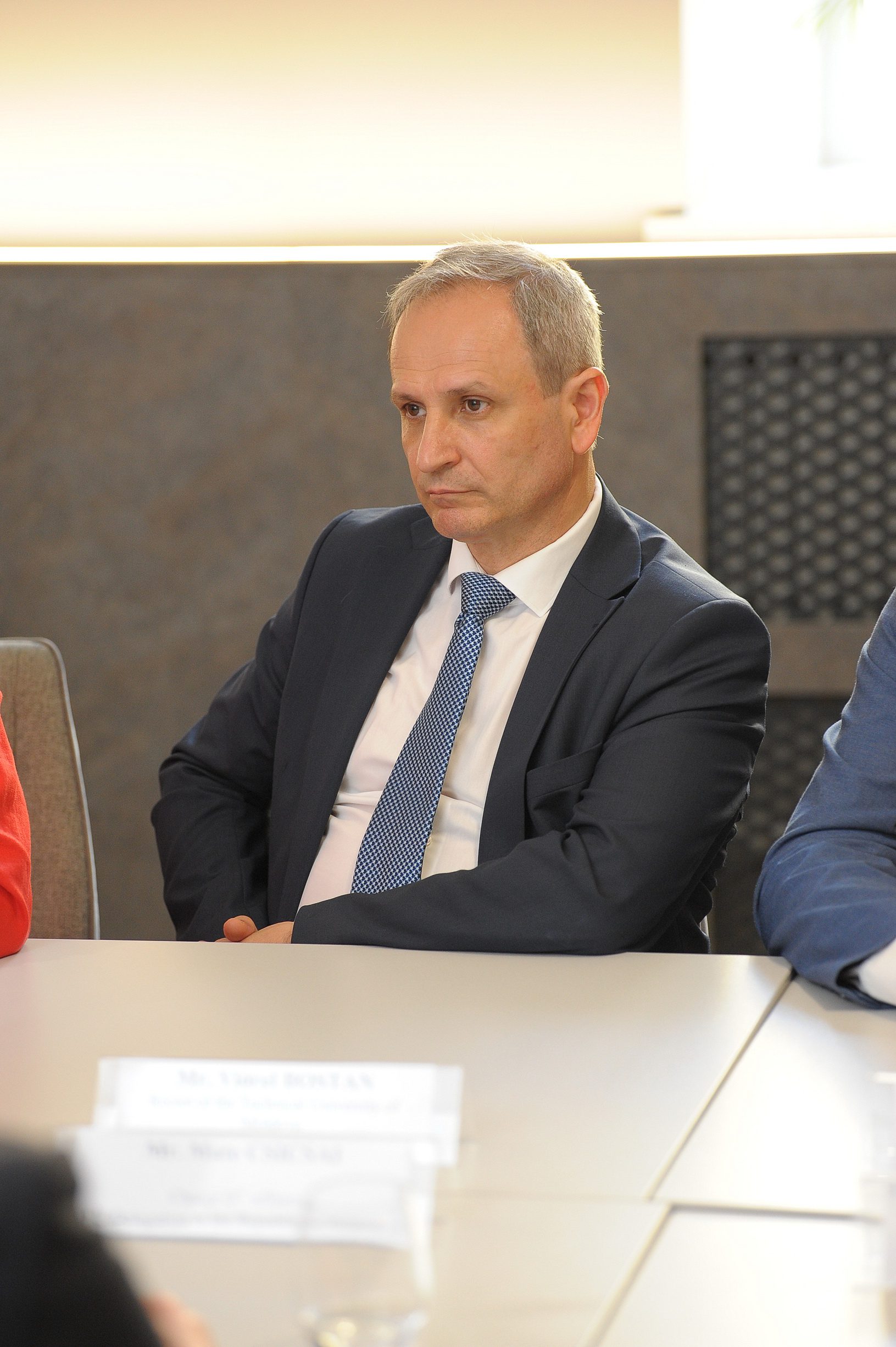
The guests were welcomed by UTM Rector Viorel BOSTAN and Vice-Rector for Digitalization Dinu ȚURCANU. During the meeting, Rector Viorel BOSTAN presented the origins and development of the CYBERCOR Institute, a strategic UTM project born from a modern vision and a clear understanding of the urgent need for cybersecurity specialists:
“Today, we are at a turning point for the Republic of Moldova, and CYBERCOR is a strategic step in the area of national security.
The National Institute for Innovation in Cybersecurity ‘Cybercor’ represents a strong bridge between education, industry, and security. It is where we train both students and public officials in a modern environment, based on real-life attack scenarios simulated in our laboratories. We work with elite international partners such as the NATO Cyber Range in Estonia, Cisco, and Fortinet to deliver training at the highest level.
And at the heart of this ecosystem is the Technical University of Moldova, an educational partner and a catalyst for innovation and excellence in the cybersecurity field. Through our study programs and active involvement in initiatives like CYBERCOR, we are shaping generations of specialists who meet the demands of the current labor market.
On this occasion, I want to send a clear message: Moldova has exceptional young people, and UTM-CYBERCOR offers them the launchpad they need. Here we build careers and a safer future for the whole country.”
The visit of the Vice President of the European Commission is part of a broader collaboration between the European Union and the Republic of Moldova in digitalization, security, and innovation. CYBERCOR-UTM has thus become both a pillar of modern engineering education and a strategic hub within the regional cybersecurity framework. Through its extended partnerships with the government, international organizations (USAID, ENISA, NATO), and top IT companies (Google, Palo Alto, SOC.MD, XDATA‑CLOUD, Kernelios), the institute reconfirms its commitment to actively contributing to the development of the digital security ecosystem.
UTM continues to promote excellence, international partnerships, and the training of a new generation of defenders of cyberspace, strengthening the digital resilience of Moldova and the entire region. The digital future of Moldova is here, and CYBERCOR is at the forefront of this transformation.
It is worth recalling that CYBERCOR features modern infrastructure covering approximately 800–1500 square meters at UTM, with four simulation laboratories, training and conference rooms, including an “Aula Magna” capable of hosting up to 300 participants. This became possible through an investment of about 2 million USD, supported by USAID, Sweden, the United Kingdom, and contributions from UTM and the Government.