
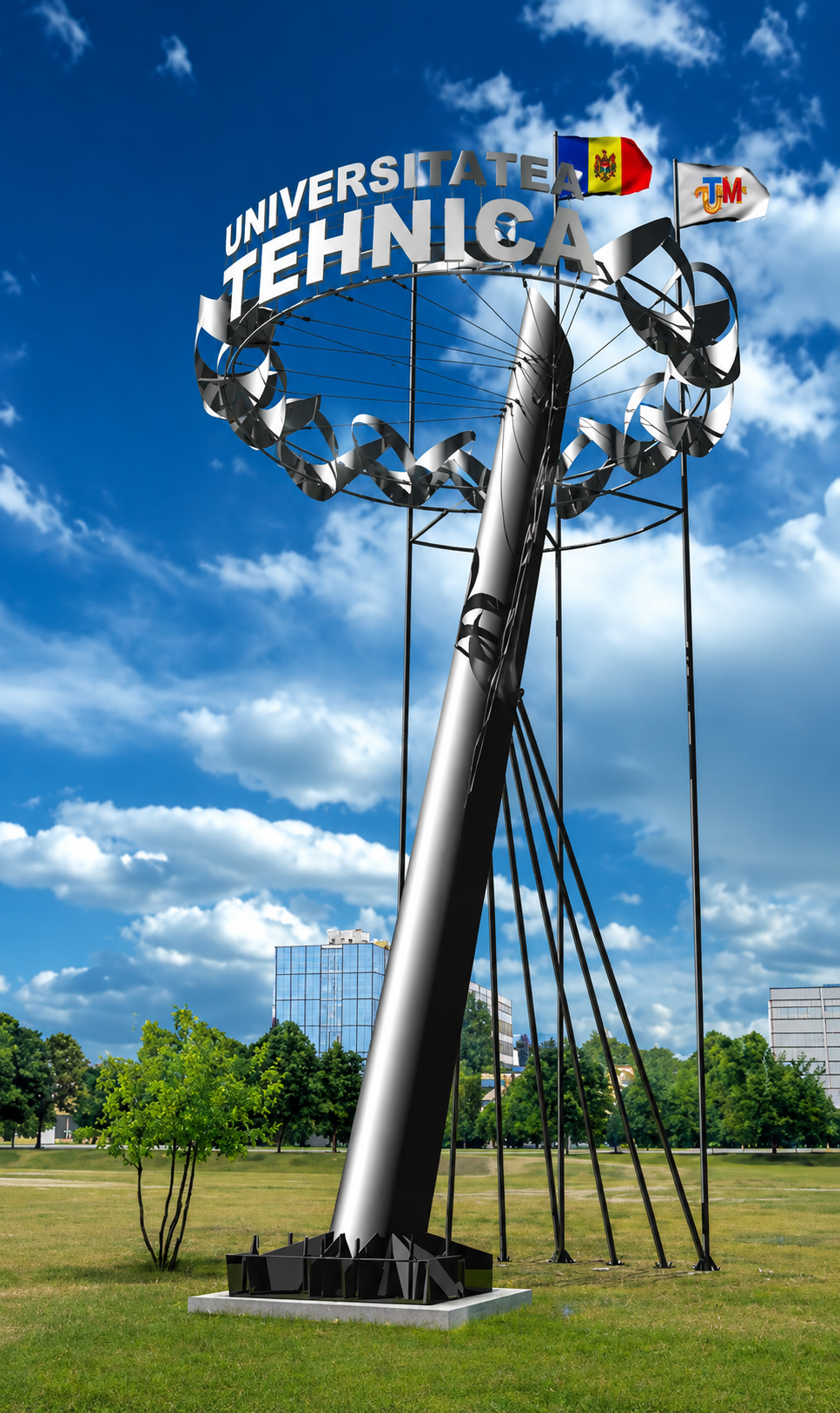
Education, Research and Innovation
The Technical University of Moldova (UTM) was founded in 1964, initially comprising three engineering faculties. In 2022, following the merger by absorption of the Public Institution State Agrarian University of Moldova, the Technical University of Moldova expanded its academic structure with three new faculties: the Faculty of Veterinary Medicine, the Faculty of Horticulture, and the Faculty of Agronomy, in accordance with Government Decision No. 485 of July 13, 2022.
Subsequently, the Faculty of Horticulture and the Faculty of Agronomy were merged to form the Faculty of Agricultural, Forestry and Environmental Sciences. As a result, UTM came to comprise 11 faculties.
In 2026, under Government Decision No. 37 of February 4, 2026, the “Bogdan Petriceicu Hasdeu” State University of Cahul was reorganized through a merger by absorption with the Technical University of Moldova. The “Bogdan Petriceicu Hasdeu” University Center in Cahul was established within UTM, comprising the Faculty of Law, the Faculty of Economics and Engineering, and the Faculty of Education Sciences.
Currently, UTM comprises 11 faculties in Chișinău and 3 faculties within the “Bogdan Petriceicu Hasdeu” University Center in Cahul.
European Integration and the Bologna Process
The ongoing development of economic globalization and the establishment of a united Europe require the creation of a common European Higher Education Area in line with the Bologna Process.
The Technical University of Moldova is committed to strengthening the value of national engineering education by enhancing academic quality, advancing scientific and technological research, encouraging the mobility of students and academic staff, and improving graduates' access to the labour market.
Educating Engineers for the Future
To meet the demands of a rapidly changing world, the Technical University of Moldova has structured its academic programmes into three cycles: Bachelor's, Master's and Doctoral studies.
UTM educates engineers for key sectors of the national economy, including telecommunications, energy, food technology, automotive transport, light industry, mechanical engineering, civil and industrial engineering, urban planning and architecture, computer science and microelectronics, veterinary medicine, and agricultural and forestry sciences.
Research and International Cooperation
The Technical University of Moldova is recognized as one of the country's leading research universities, achieving outstanding scientific results with growing international visibility. UTM's research centres successfully implement the university's research strategy through nationally and internationally competitive research grants and programmes.
International cooperation in education and research is one of the university's strategic priorities. UTM maintains partnership agreements with universities in Belgium, Belarus, Bulgaria, Canada, Germany, France, the Netherlands, Romania, the United States, Sweden, Ukraine, Spain, Russia, and many other countries.
Campus Life
The university offers an extensive educational infrastructure, including modern laboratories, computer-aided design classrooms, high-speed Internet access, student residences, medical centres, cafeterias, and contemporary sports facilities.
UTM is widely recognized as one of the most active and successful universities in sports among higher education institutions in the Republic of Moldova.