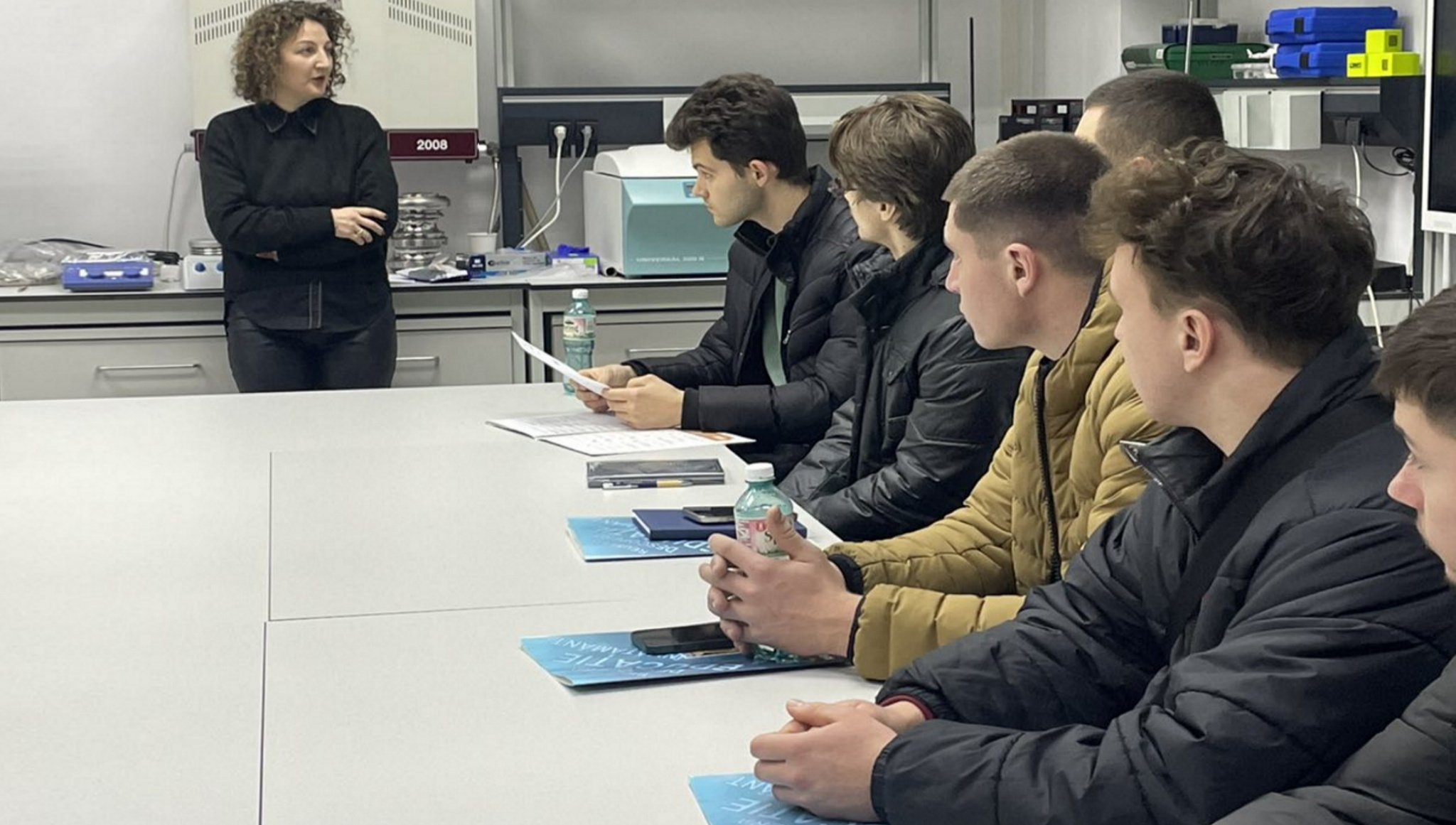
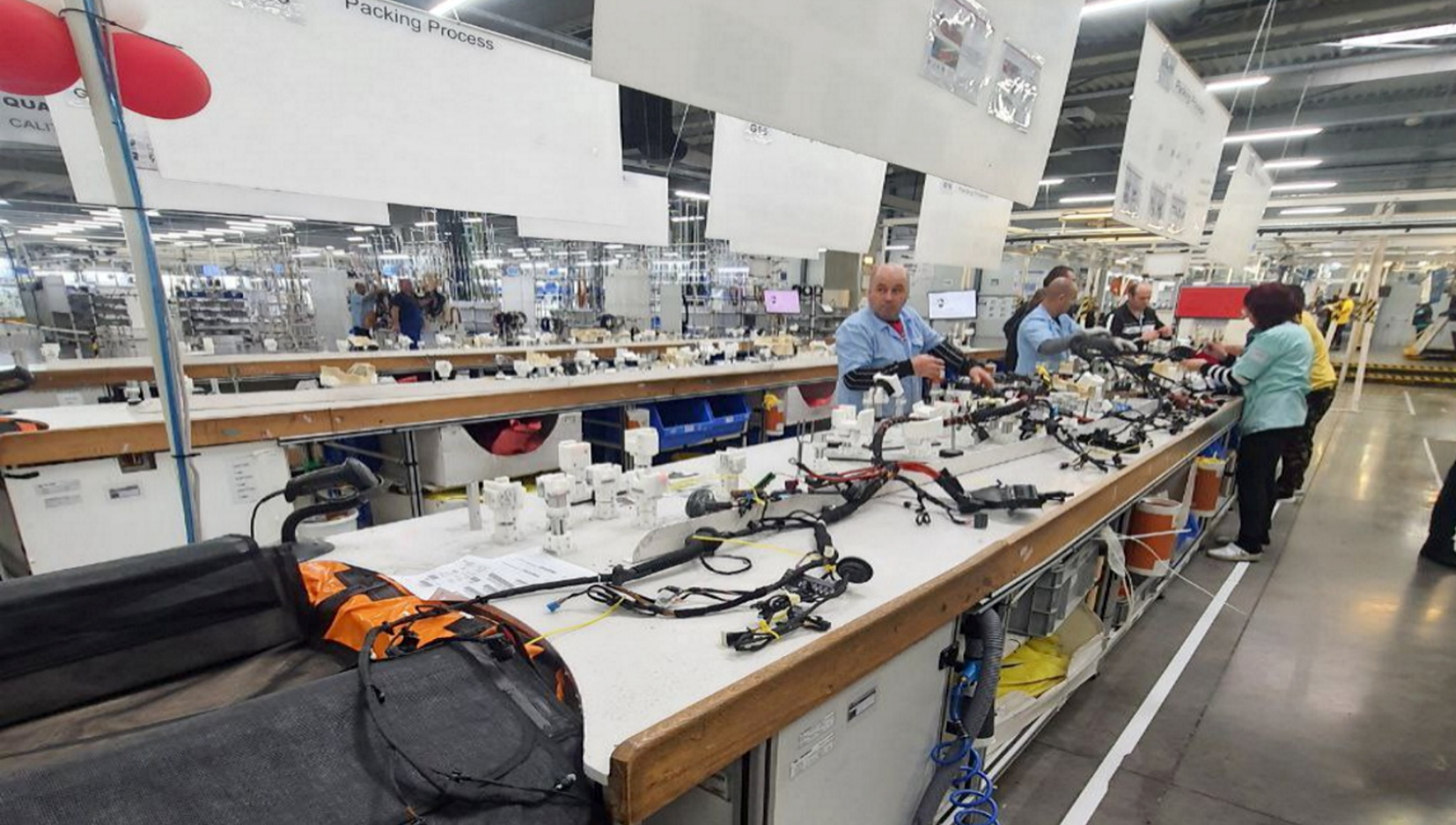
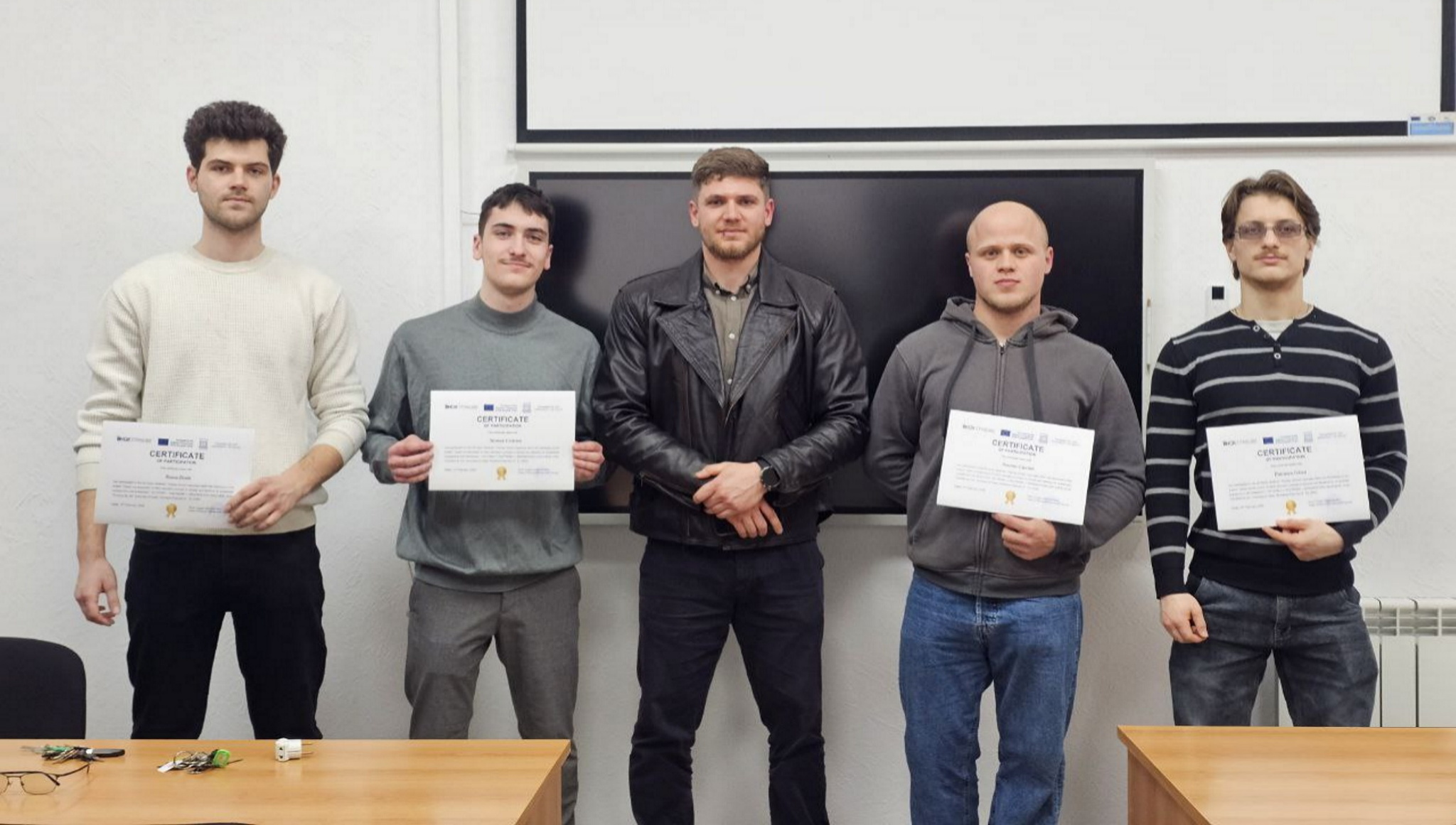
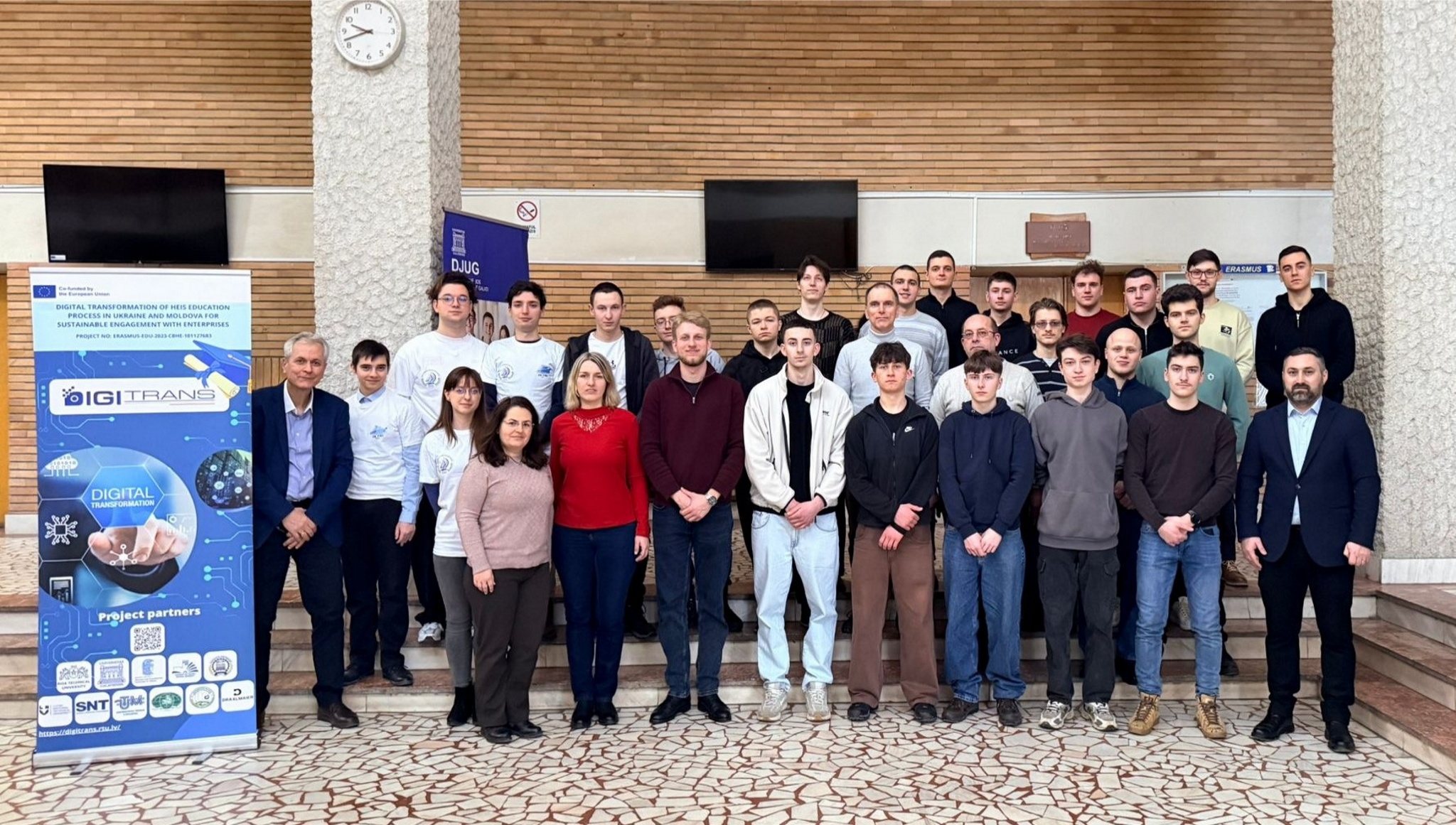
This exceptional experience was structured around three essential pillars: theory, practice, and vision. It began with an in-depth technological immersion, with young engineers introduced to the European Union’s research system through theoretical courses delivered by experts. The program transitioned naturally toward real-world industry exposure, where theory came to life in laboratories and through study visits to leading companies such as TRANSURB SA, YAZAKI Romania, GLORIOUS LIGHTING, and APAN Automobile. Here, complex industrial processes became tangible, giving students a clear perspective on labor-market demands and on the ways digital competencies can be applied and valued in real-world contexts.
Beyond the daily activities, this event represents a fundamental milestone with a direct impact on the future careers of participating engineers. Academically and professionally, UTM students gained a rare opportunity to align their knowledge with top European standards, earning a significant competitive advantage. In parallel, their personal development was equally meaningful; interaction with professors from partner universities in Ukraine (Kharkiv National Automobile and Highway University, Lutsk National Technical University, and Chernihiv Polytechnic National University), who worked alongside the faculty of the host university, facilitated an authentic exchange of ideas, best practices, and educational perspectives.
The program was complemented by a cultural component, with participants discovering the city of Galați and visiting the “Răsvan Angheluță” Natural Sciences Museum Complex. These creative relaxation moments provided the ideal setting for intercultural dialogue, networking, and the strengthening of professional friendships in a diverse international environment.
For UTM students, participation in the DIGITRANS school meant more than a training program: it was a lesson in adaptability and the courage to look beyond borders. At the core of all these achievements stands institutional cooperation, the heart of the project, demonstrating that educational success depends on strong partnerships between universities and the business sector. This synergy between institutions in the Republic of Moldova, Ukraine, and Romania forms a solid bridge toward a sustainable digital transition, confirming that the future of engineering is one without borders, where innovation and academic solidarity remain the only viable paths to progress.