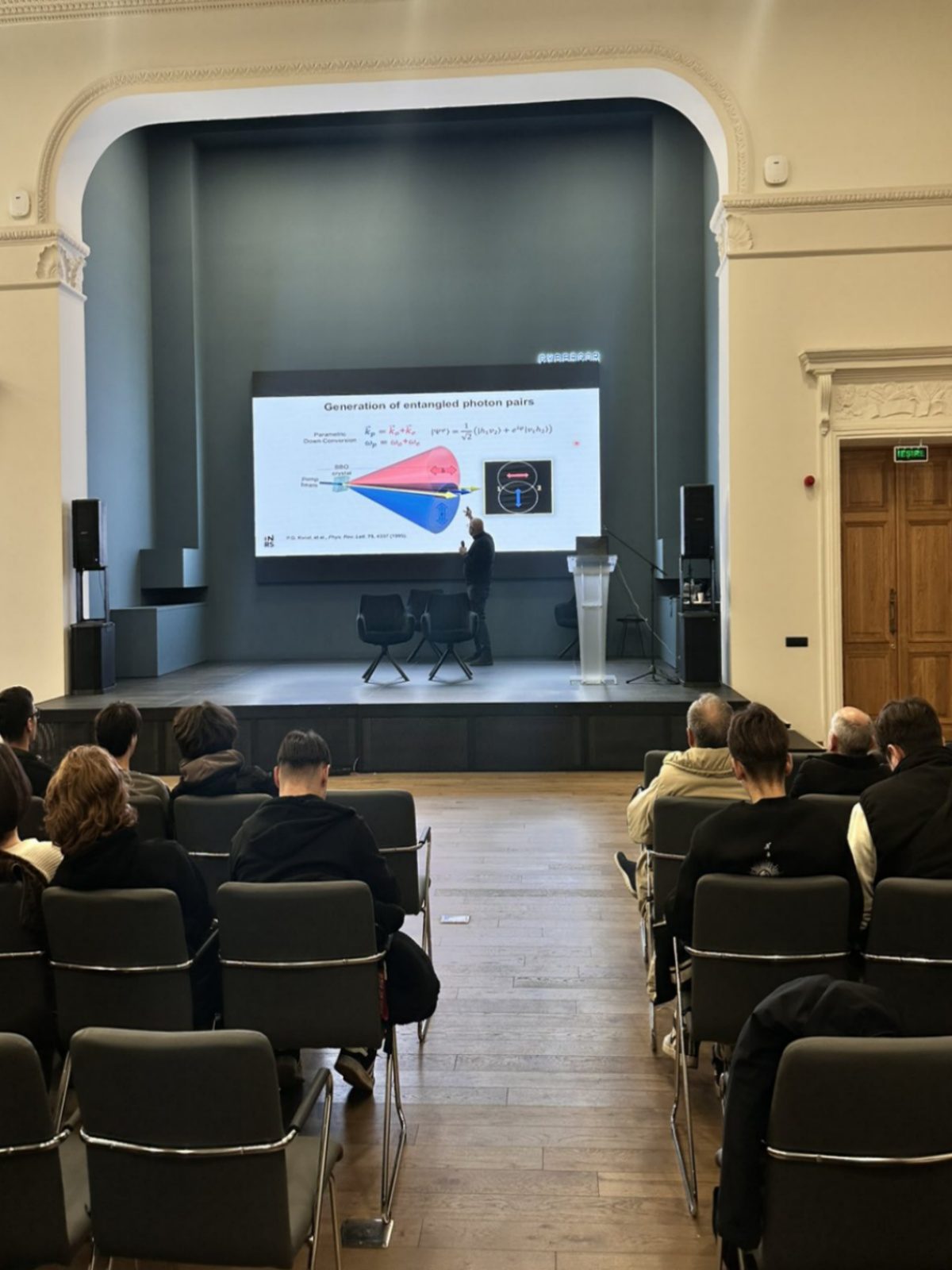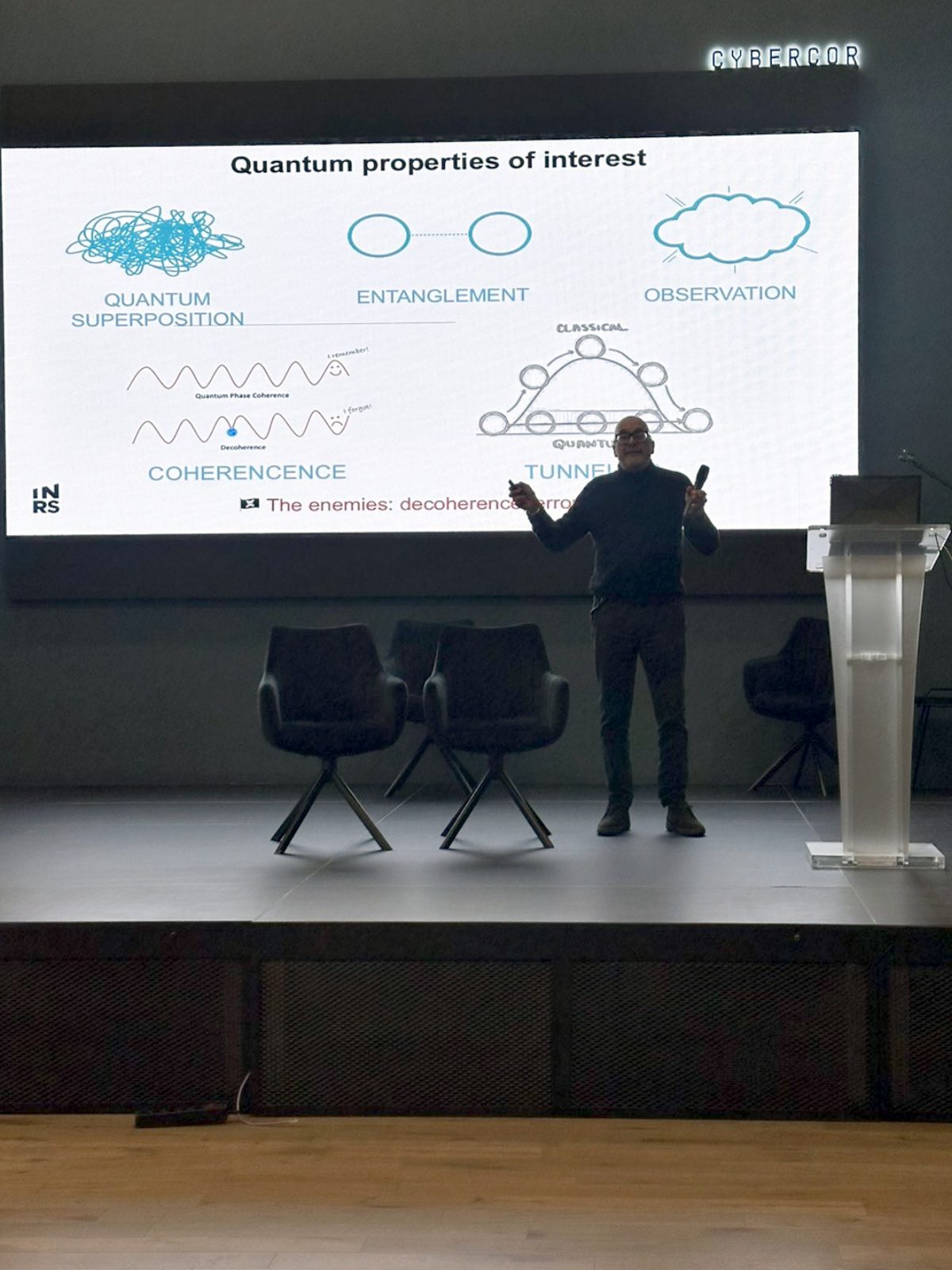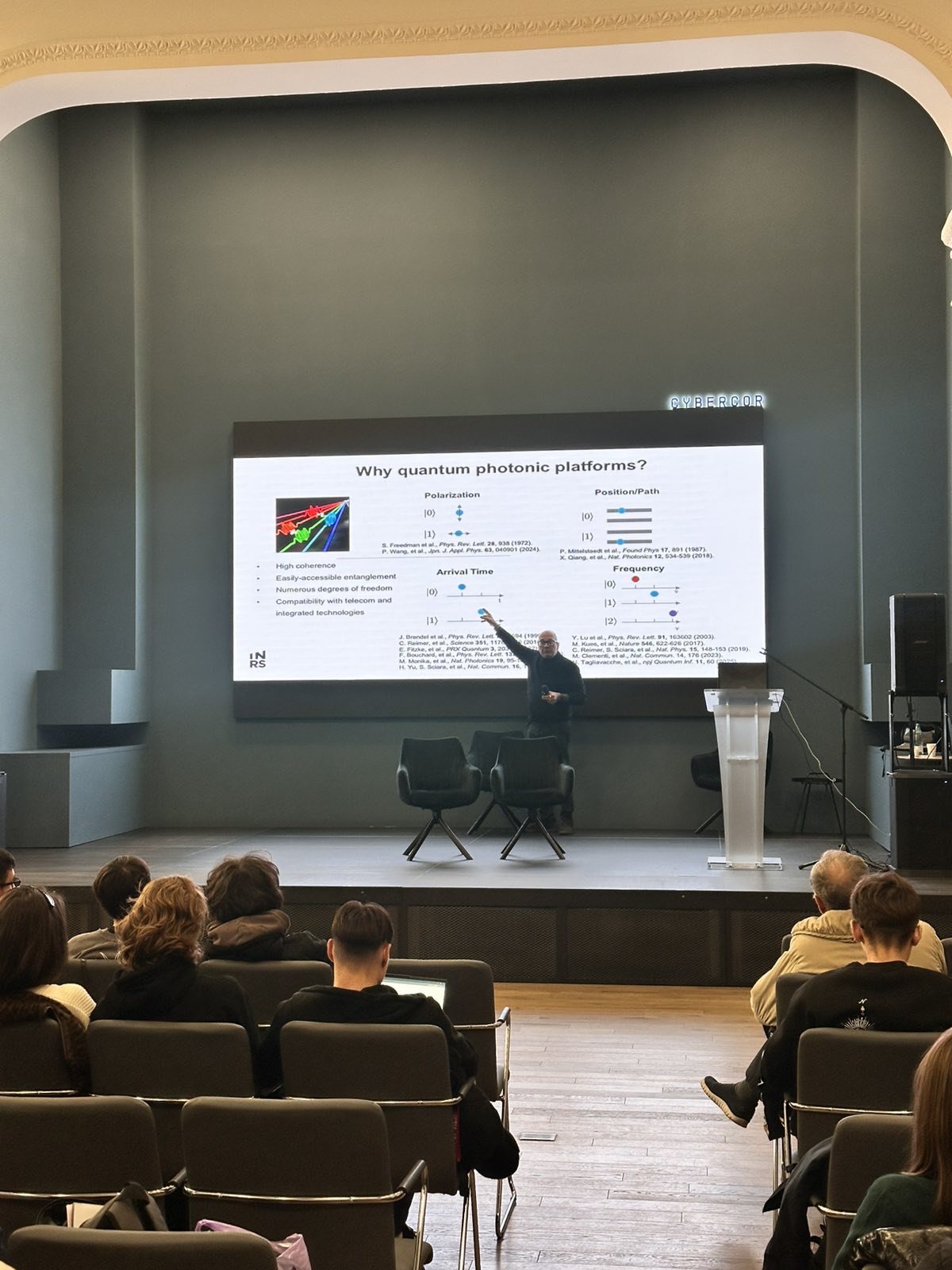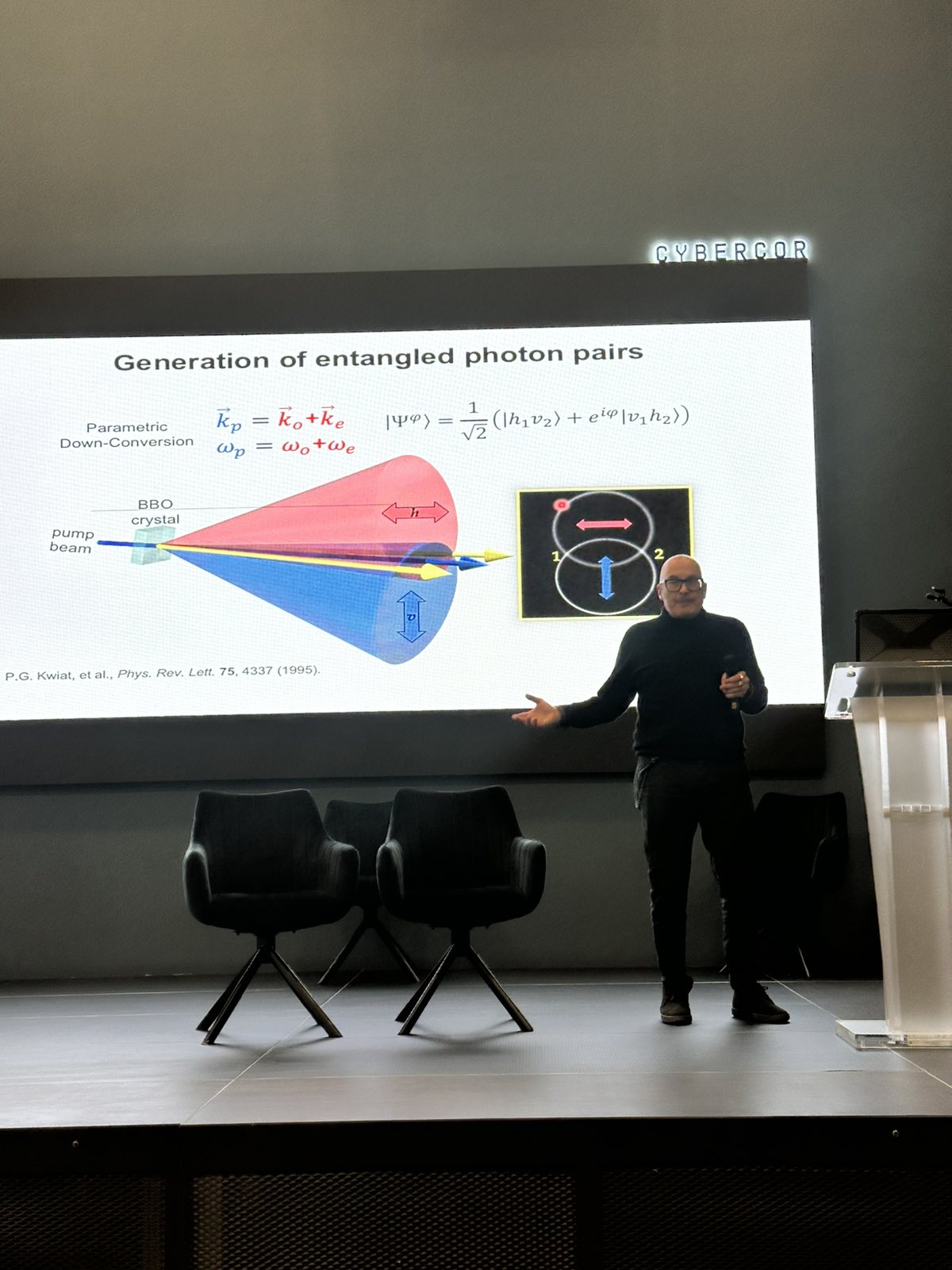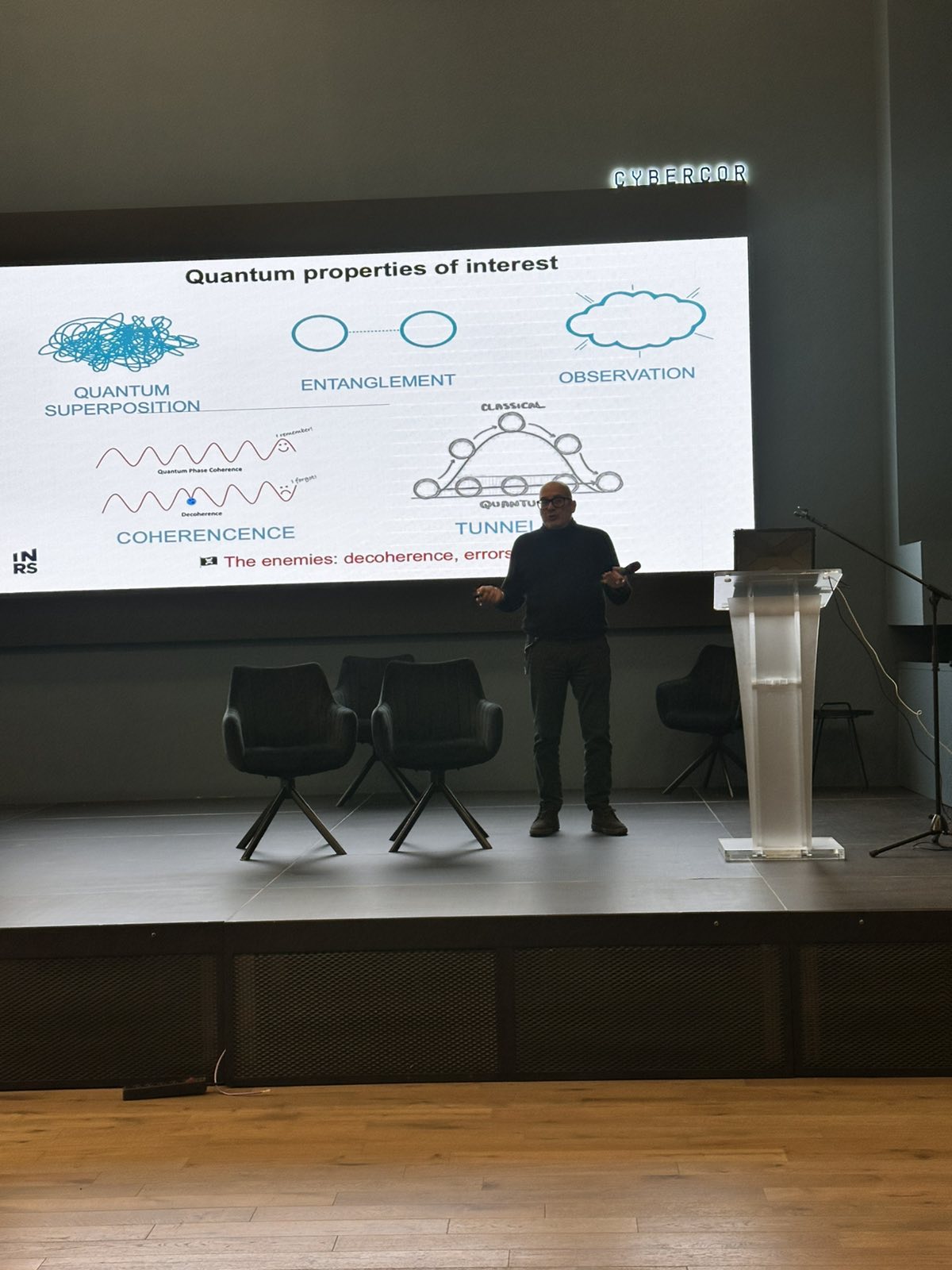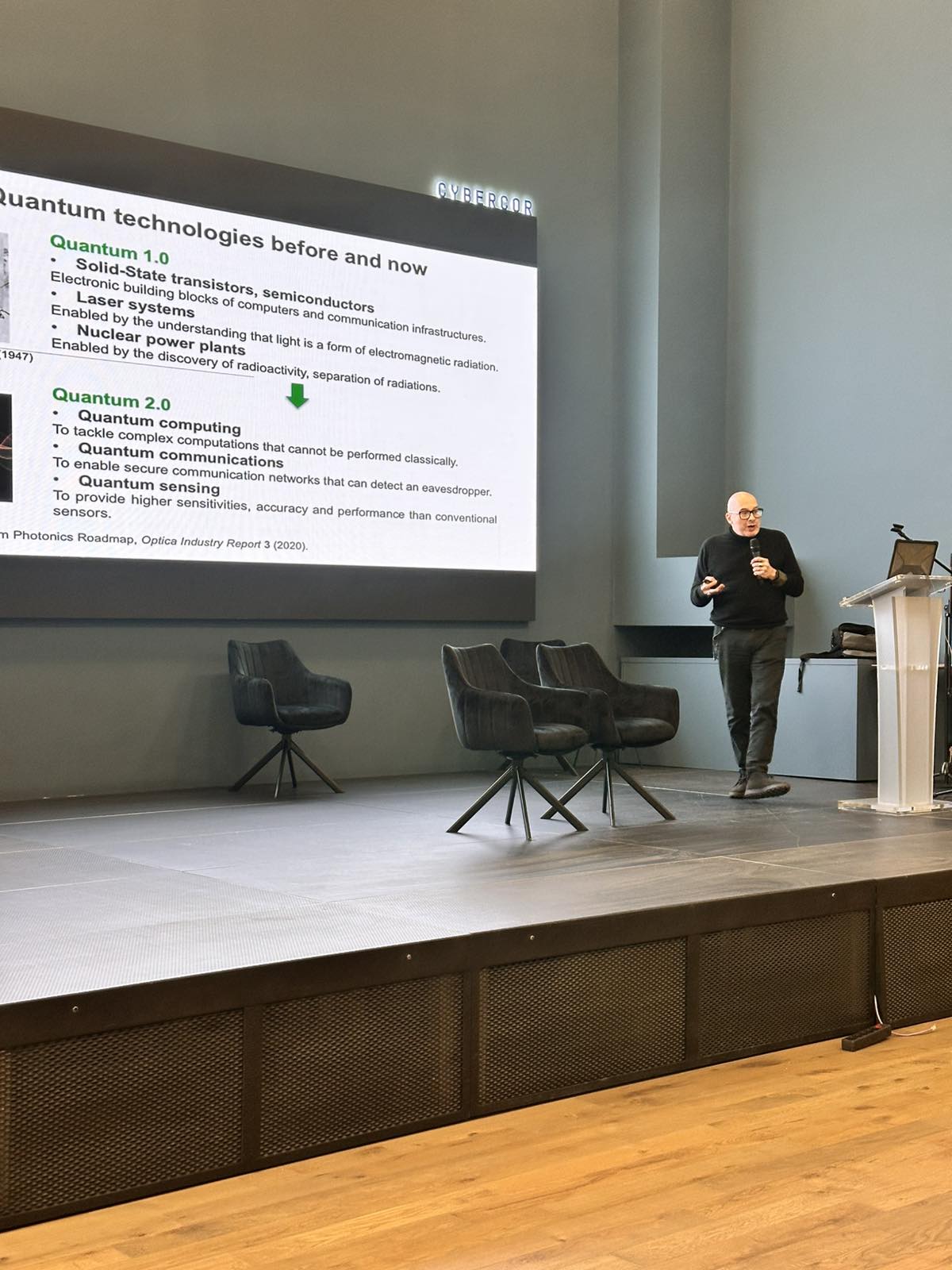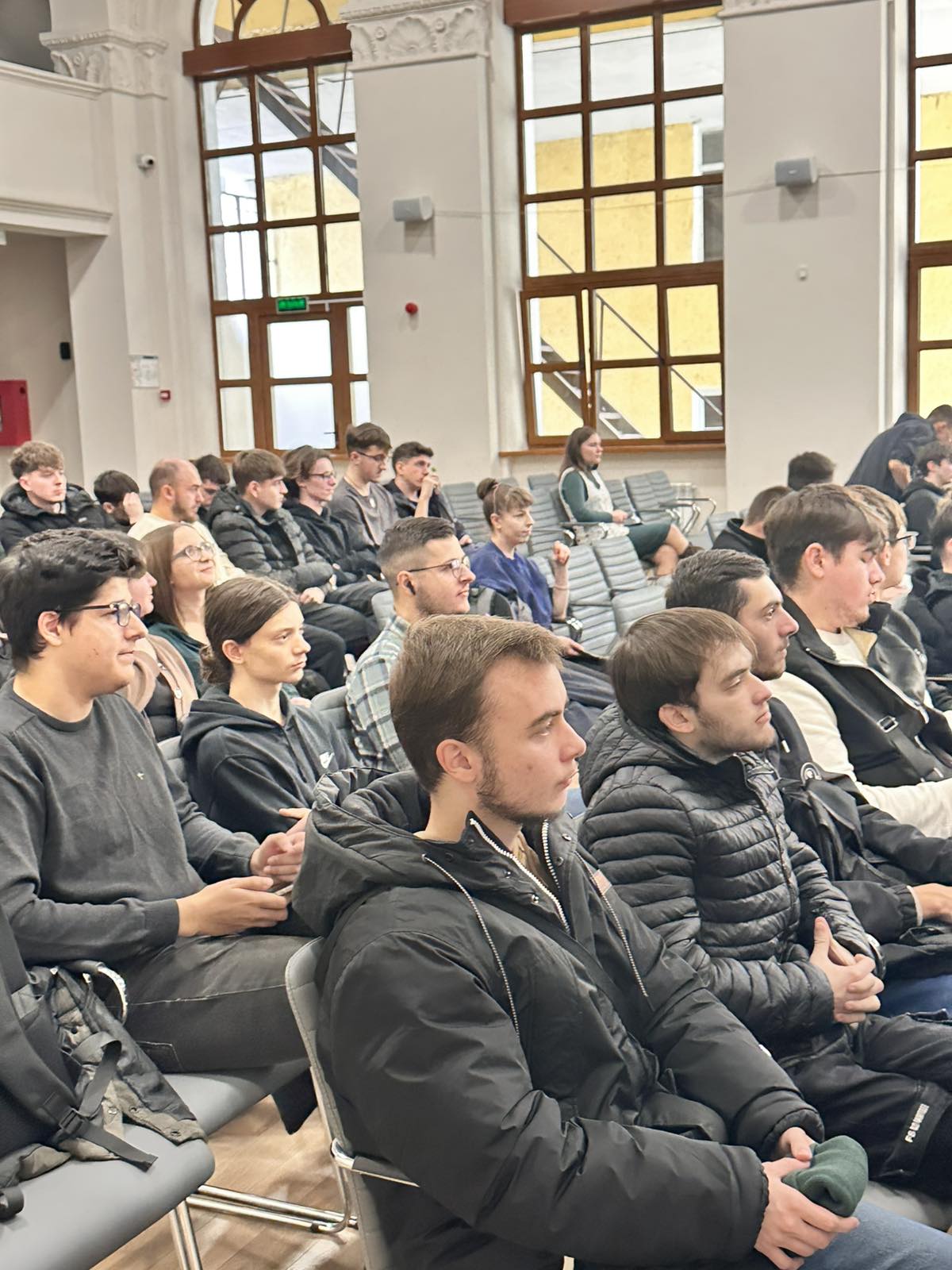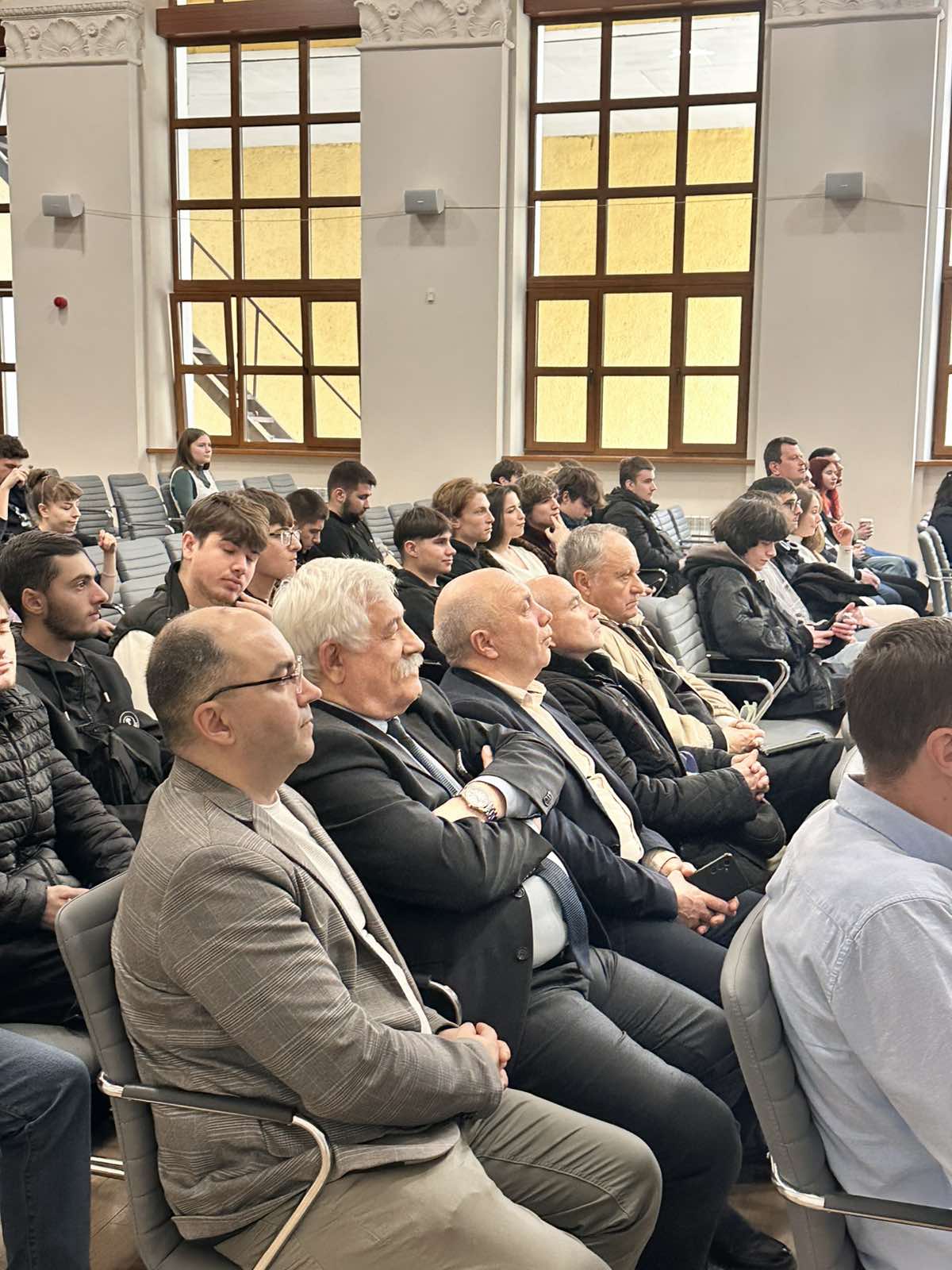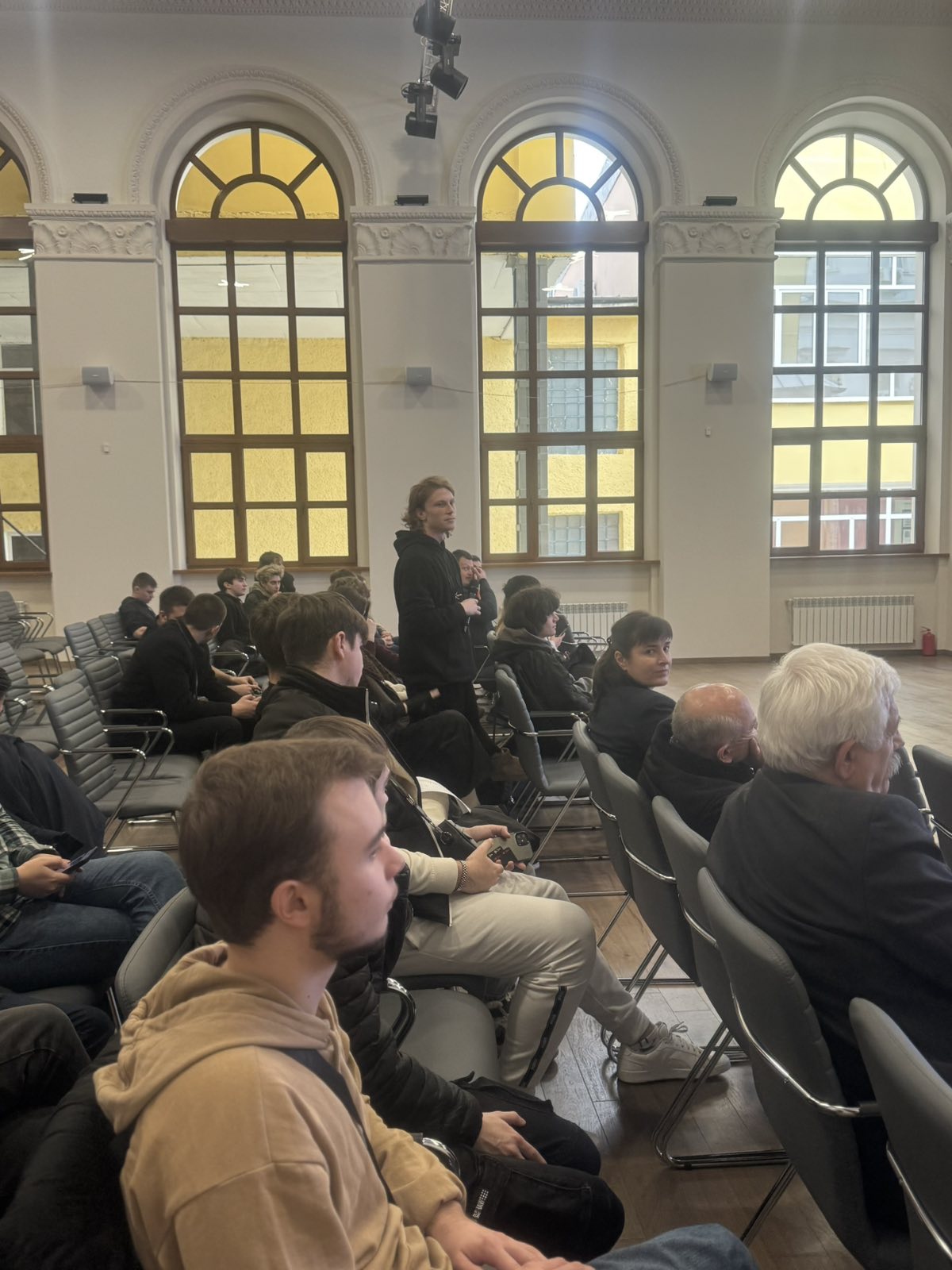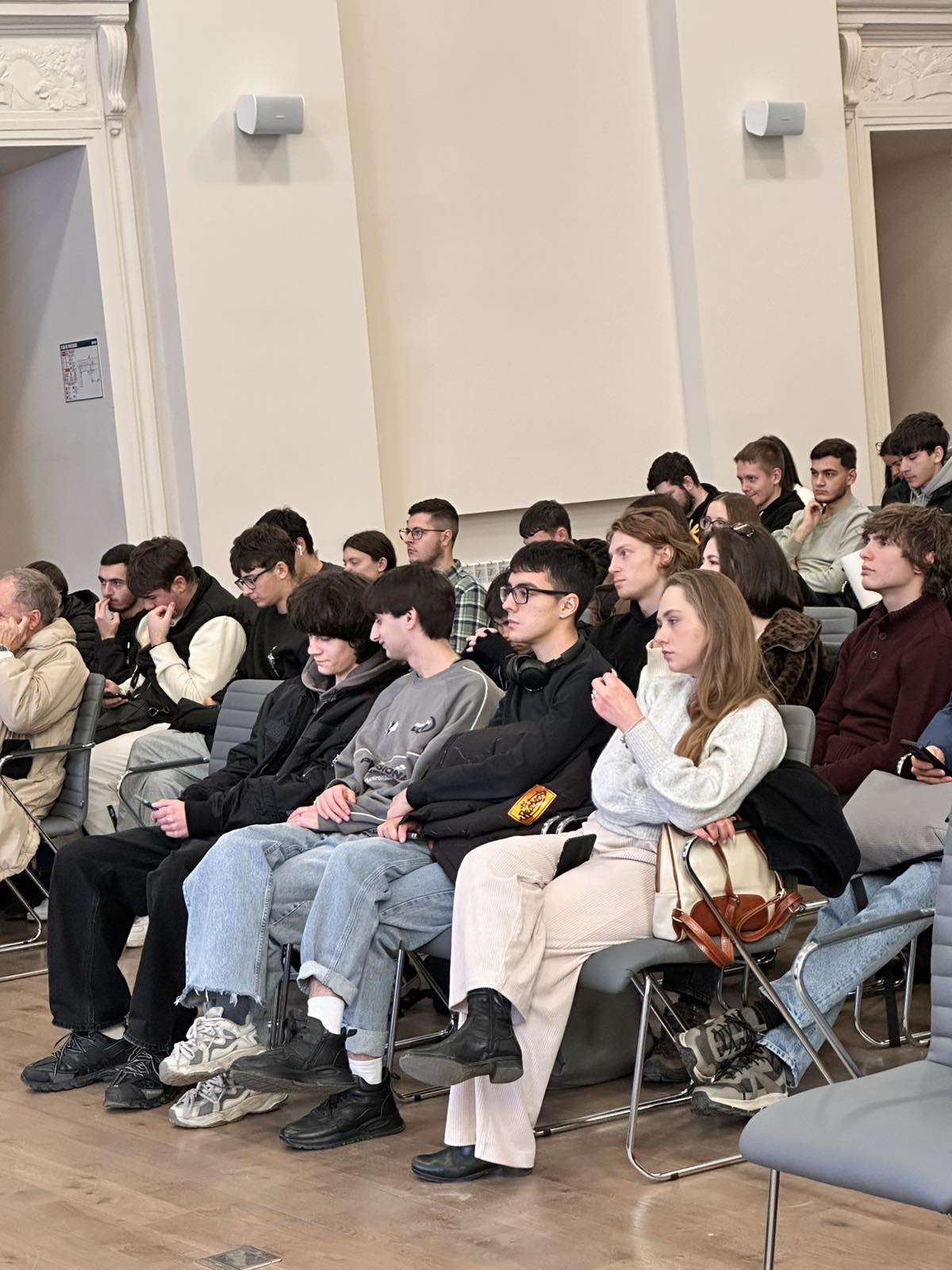
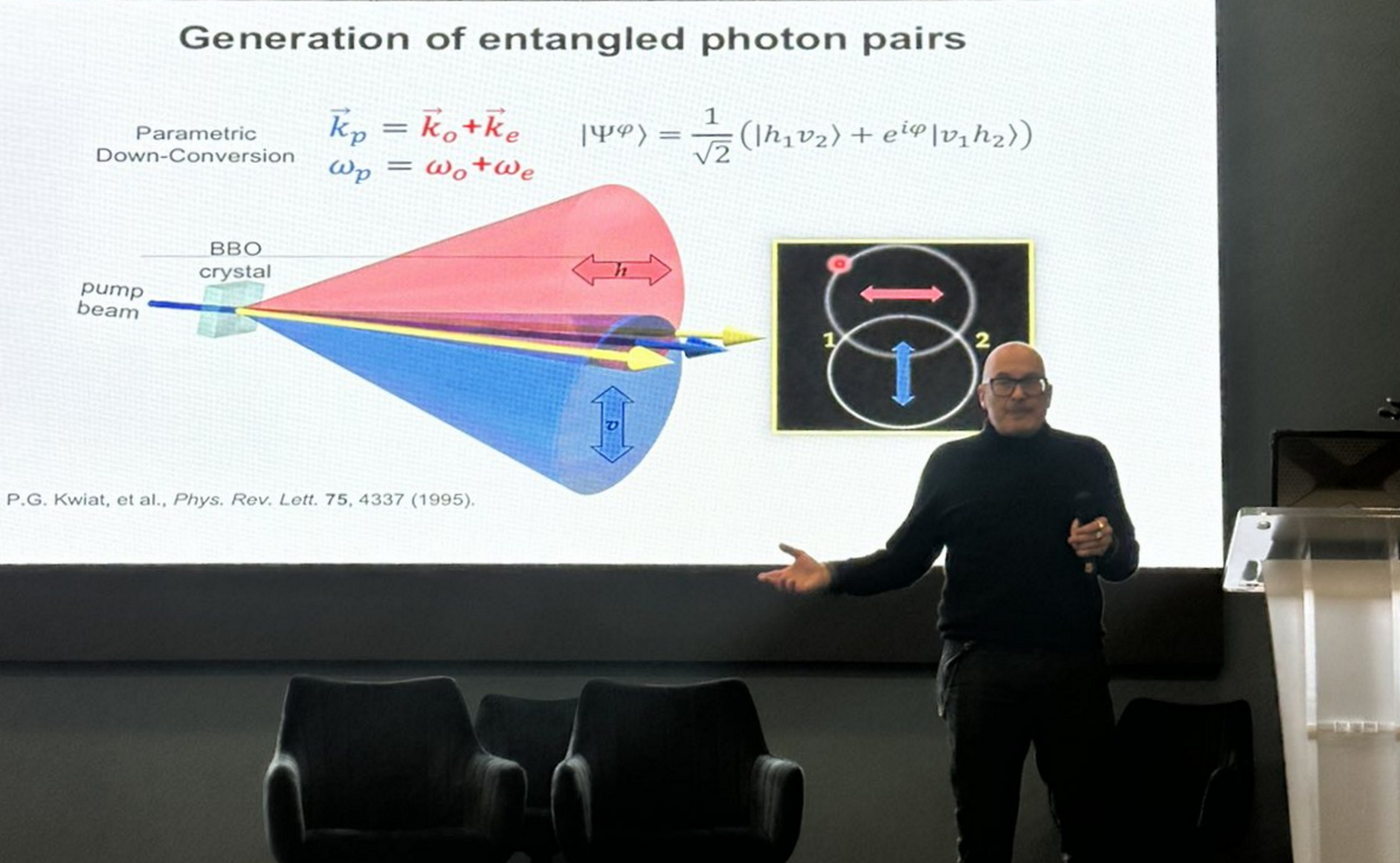
The academic community of the Technical University of Moldova had the special opportunity to host Professor Roberto Morandotti from the National Institute of Scientific Research – Energy, Materials and Telecommunications (INRS-EMT), Canada, on December 15, in Magna Hall. The event was organized by the Faculty of Electronics and Telecommunications at UTM and was opened by Dr. Andrei Dorogan, lecturer, who emphasized the importance of giving students and faculty access to cutting-edge research.
Professor Roberto Morandotti, one of the world’s leading researchers in integrated photonics, quantum optics, and quantum technologies compatible with telecommunications infrastructure, came to Chișinău with an impressive track record – laureate of the NSERC Synergy Award (2019), the Prix Marie-Victorin (2022), and the Prix Urgel-Archambault (2023). Most recently, his excellence in the field was reaffirmed by being awarded the prestigious IEEE Photonics Society Quantum Electronics Award (2025) for his pioneering work in the generation of entanglement and processing of complex quantum states in photonic devices and systems.
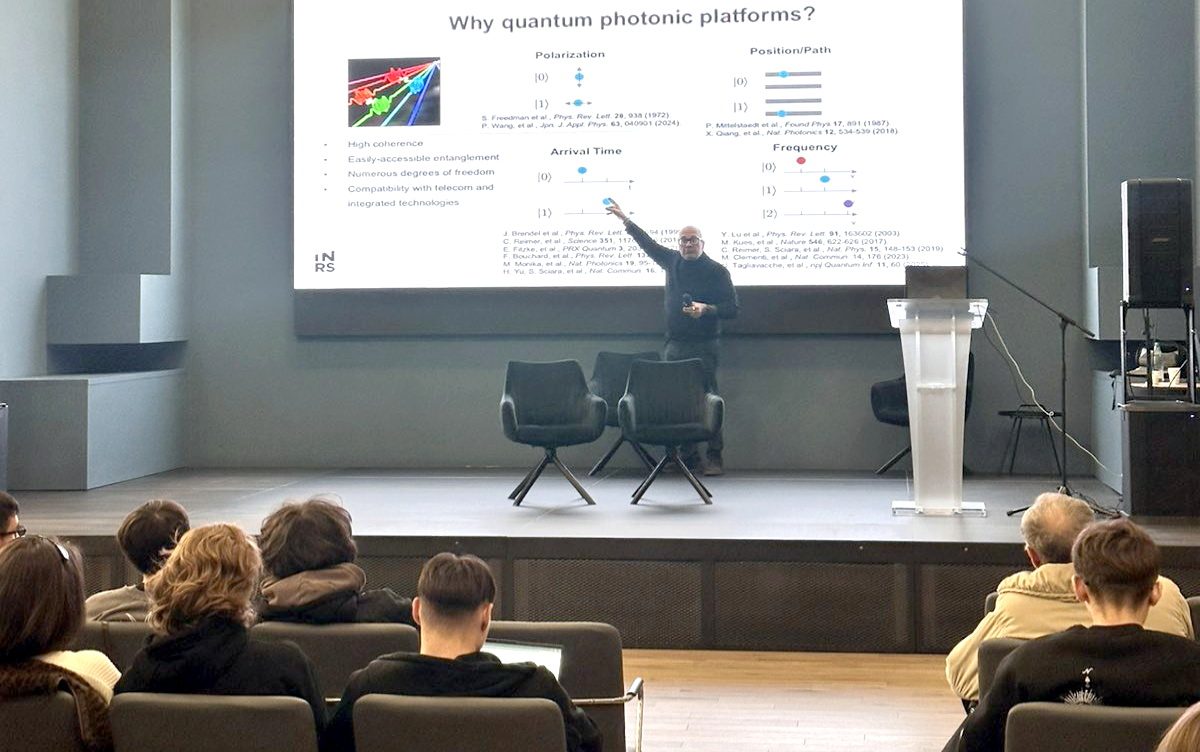
Delivered in English, his scientific lecture, “Photonics Quantum Processing using Frequency and Time,” sparked strong interest among a large audience—students, IT engineers, faculty members, and experienced researchers—who were deeply impressed by how photonics is reshaping the way quantum information is processed and transmitted, by using fundamental resources such as frequency and time.
During his presentation, Professor Morandotti shared the latest developments achieved by his team, placing special emphasis on time-bin encoding and stable interferometry, which are essential for scalable and robust quantum architectures. He explained that photonics offers a natural platform for quantum information due to the stability of photons and their compatibility with existing fiber optic networks.
Photons, time, and frequency—pillars of a new quantum paradigm
Professor Morandotti pointed out that photons offer multiple degrees of freedom—time, frequency, spatial modes, or orbital angular momentum. These enable the creation of qudits (high-dimensional quantum states), which surpass the traditional binary limitations of qubits. Qudits provide distinct advantages: much higher information storage capacity, greater resilience to noise, and enhanced security—critical elements for the secure quantum communication networks of the future.
Special focus was placed on temporal encoding, where quantum information is encoded in the arrival time of the photon. This approach has proven extremely stable, both for on-chip integrated photonics and long-distance telecommunications networks.
Photonic quantum processing—tangible experimental results
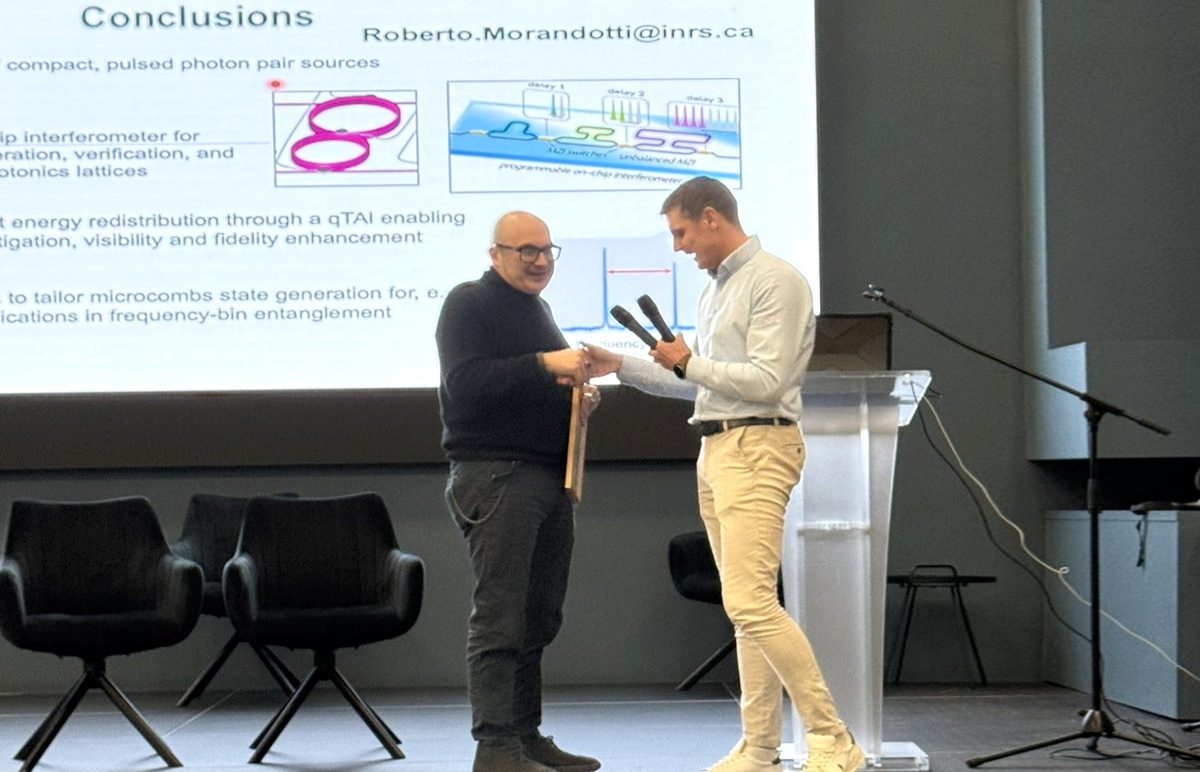
During the lecture, Professor Morandotti presented a series of landmark experimental achievements. One of the platforms developed by his team combines a cascade of on-chip integrated interferometers with a spiraled integrated waveguide. This architecture enabled the generation of entangled qudits in the C-band of telecommunications.
Based on this system, the team implemented the first quantum key distribution (QKD) protocol using entanglement and qudits, successfully deployed over a 60 km fiber optic link. The secret key rates obtained—on the order of kilobits per second—significantly outperformed those of conventional protocols.
In a complementary approach, the group presented the development of a fully fiber-integrated coupled-loop interferometer, paired with periodically poled lithium niobate waveguides. This platform created a synthetic temporal photonic lattice, allowing precise control of quantum walks and observation of quantum interference without the need for post-selection.
In the final part of his lecture, Professor Morandotti outlined key future directions: distributed quantum networks, hybrid photonic quantum computers, and advanced platforms for quantum metrology.
“In the future, it is possible that we will have computers with both quantum and classical capabilities. The quantum part would be used only for solving specific problems that are difficult for classical computers,” he noted, emphasizing the complementarity between the two realms.
The lecture offered a deep insight into photonics as a key technology, giving students and professionals direct contact with the kind of innovation that will shape digital security and computing power in the coming decade.