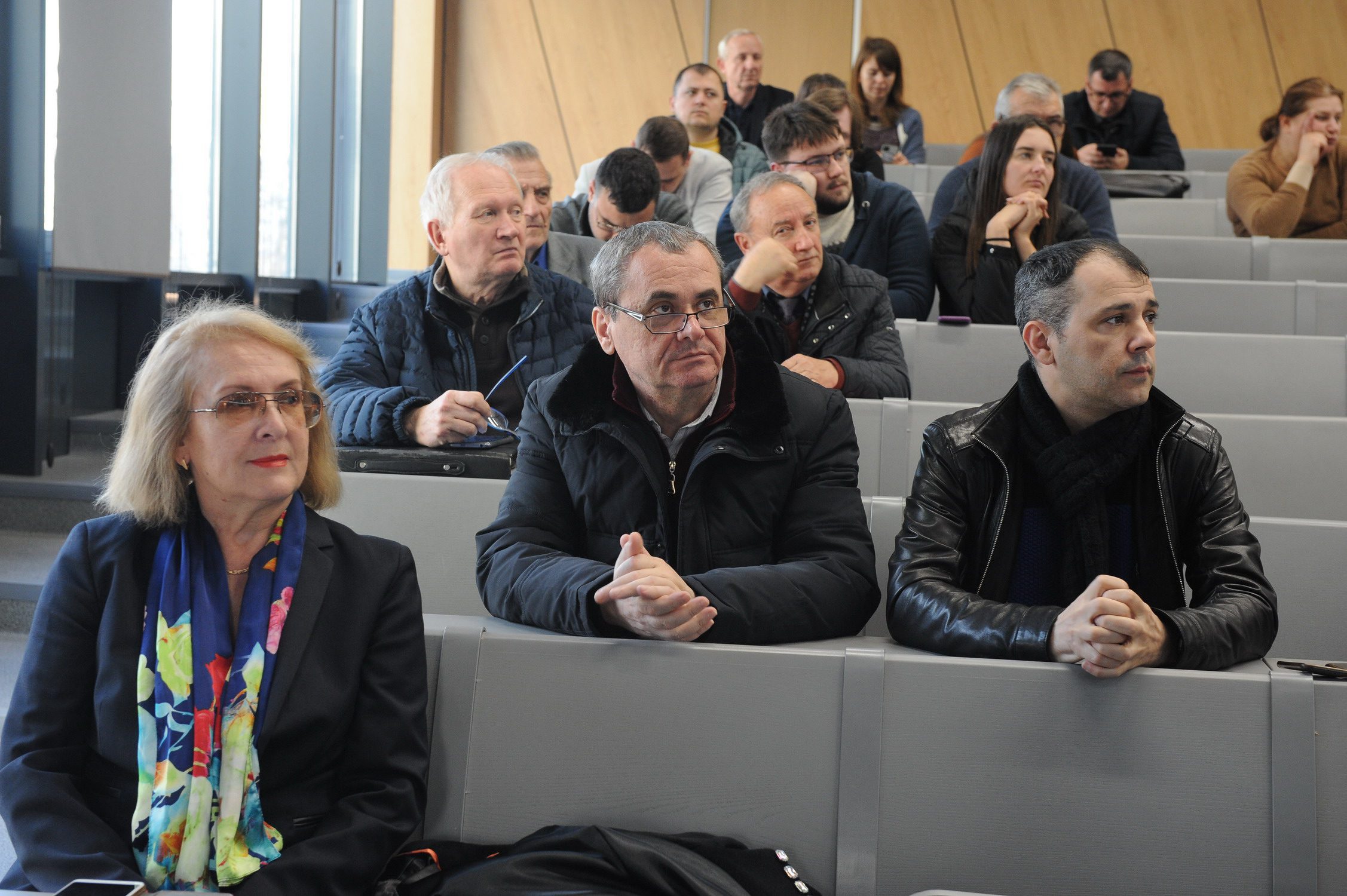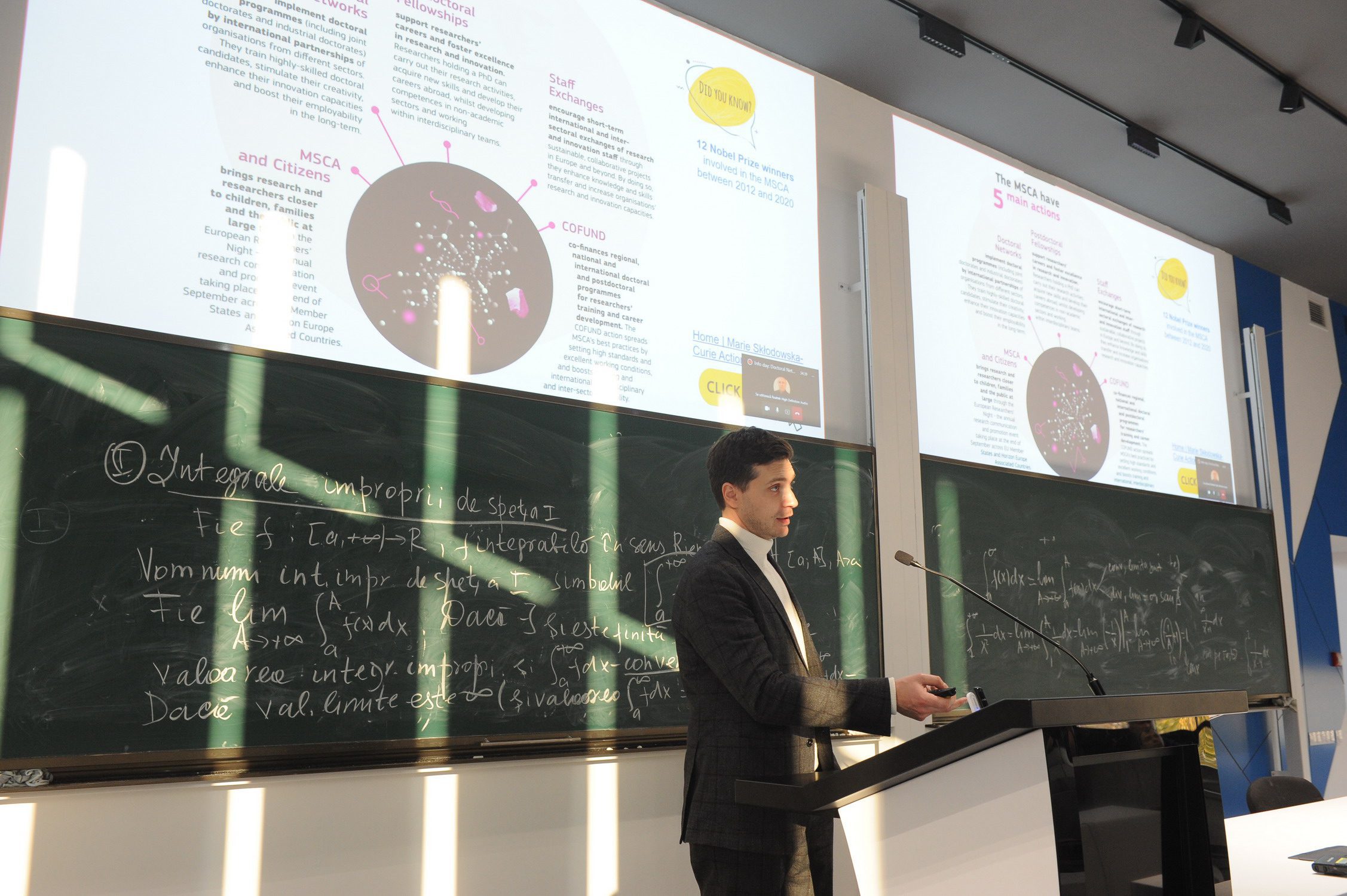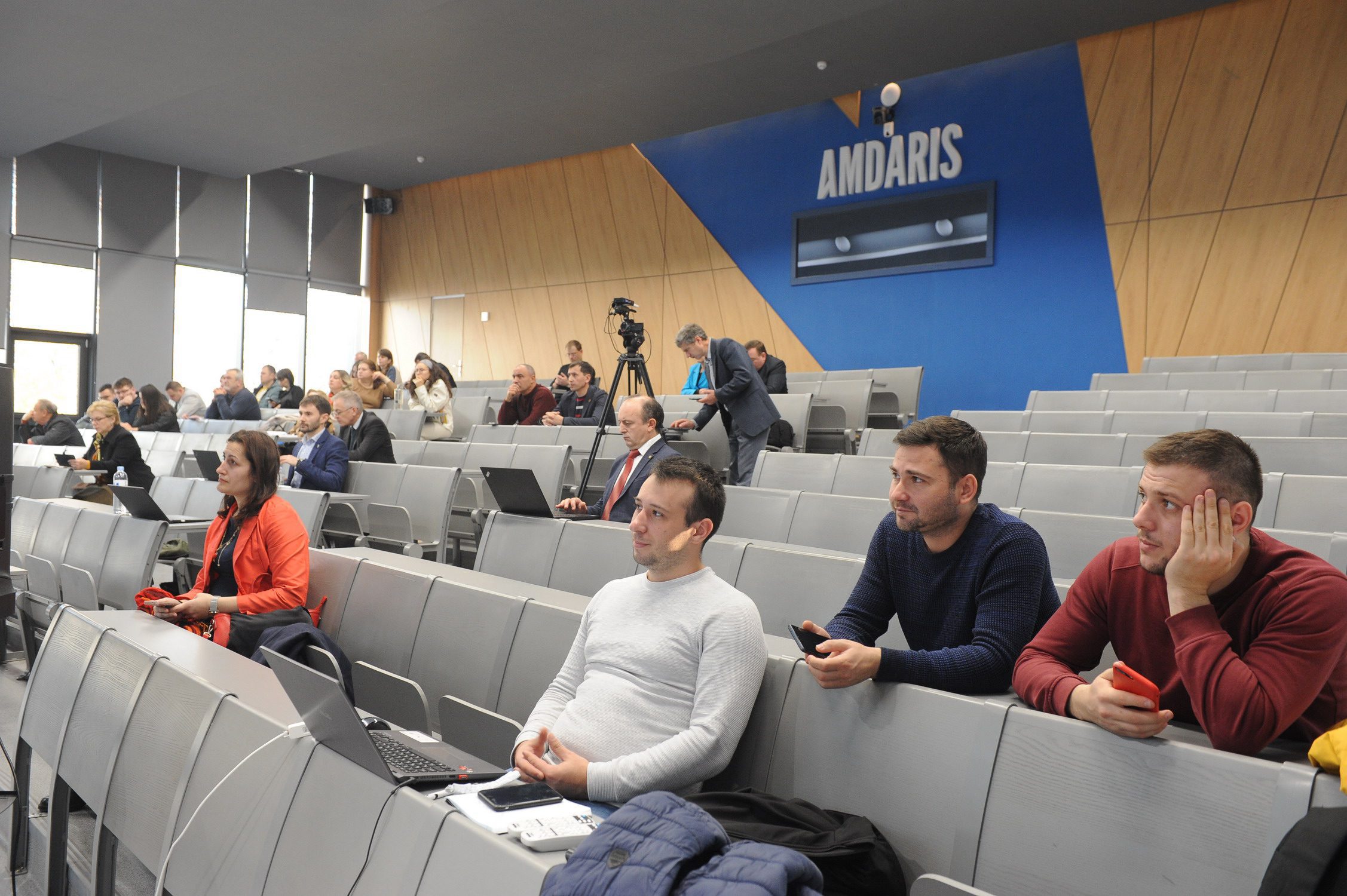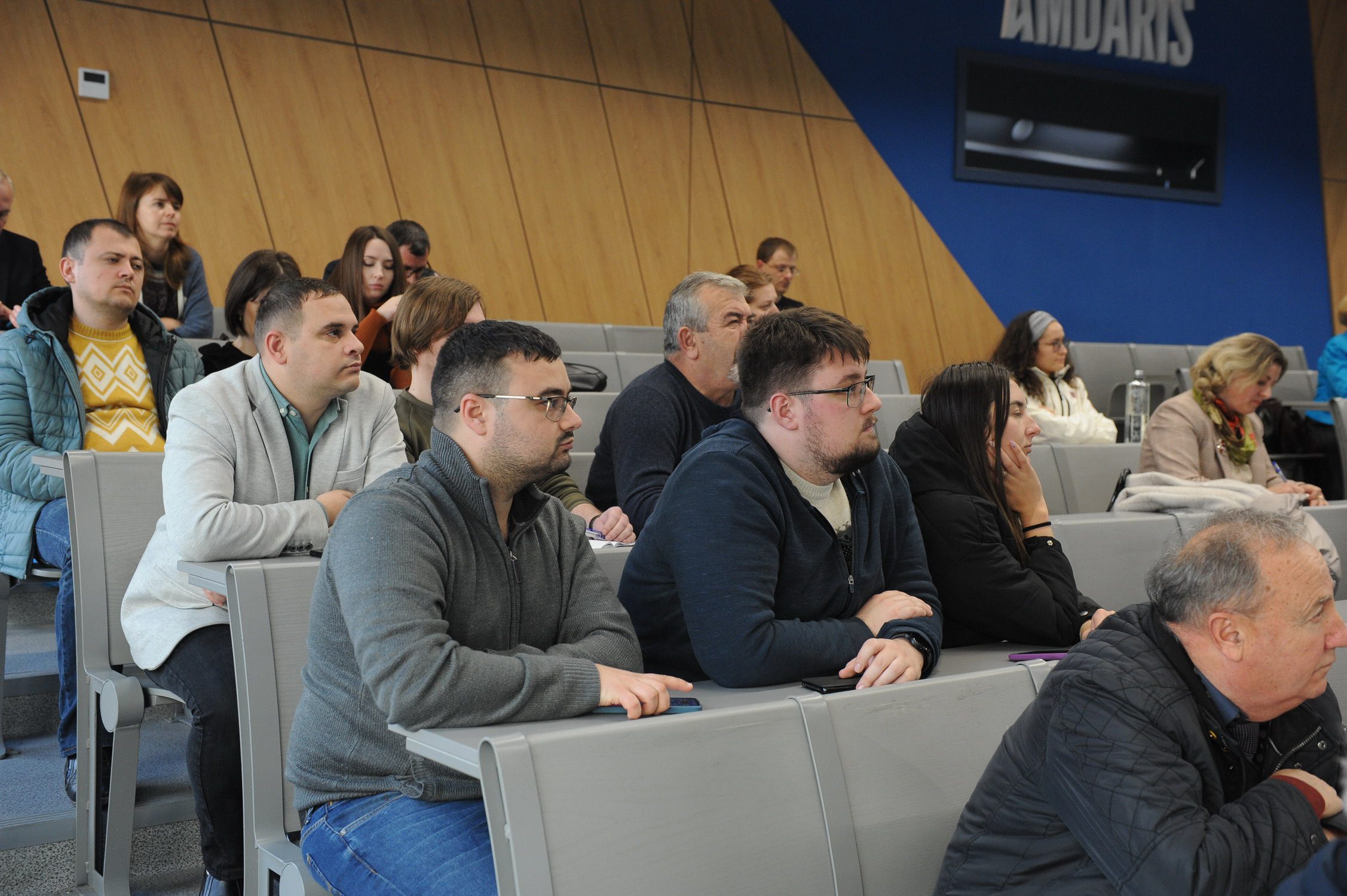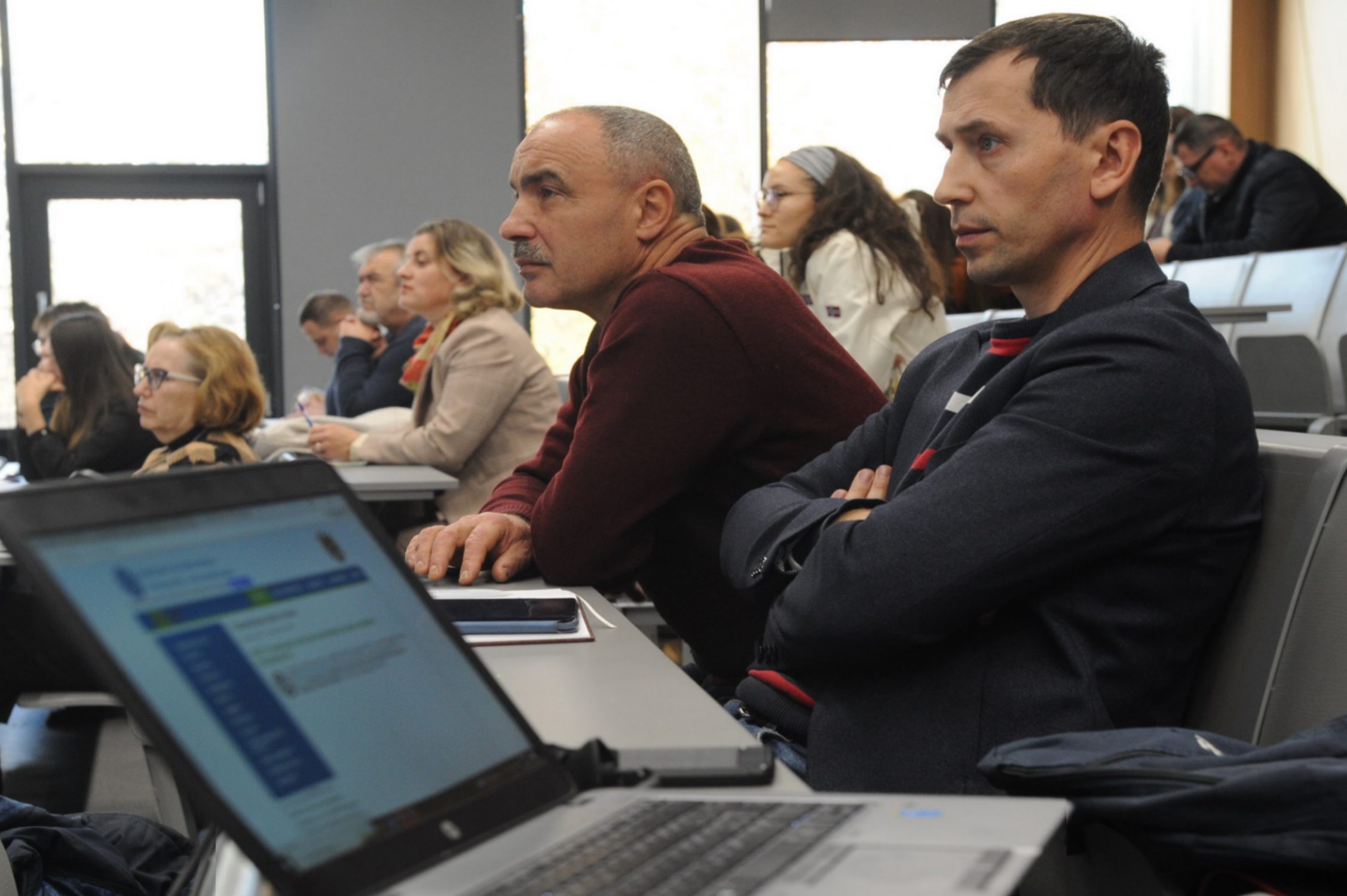

In the context of the events inaugurated for World Science Day for Peace and Development, celebrated annually on November 10, the Technical University of Moldova hosted a meeting dedicated to the Doctoral Networks, prepared within the Marie Skłodowska-Curie Actions (MSCA) of the Horizon Europe Program, organized under the auspices of the European Research Executive Agency in partnership with the National Agency for Research and Development.
The event brought together doctoral students, heads of doctoral schools, as well as young people who aspire to pursue a doctorate in the European Research Area. The participants were greeted by Univ. Prof., Dr. habil. Oleg LUPAN, head of the Department of Microelectronics and Biomedical Engineering (DMIB) of the UTM Faculty of Computing, Informatics and Microelectronics, and UTM vice-rector for Research and Doctorate, Univ. Prof., Dr. habil. Vasile TRONCIU.
The objective of the MSCA Doctoral Networks is to implement doctoral programs through partnerships between organizations from different sectors (academic and non-academic). The NARD representative, Victoria DANILĂ, lead specialist within the Innovative Projects Directorate, drew attention to one of the programs implemented by the National Agency for Research and Development – EntreComp, developed by the European Commission. The project aims to develop the entrepreneurial skills of young researchers by placing emphasis on three key areas – Creativity, Teamwork and Resource Mobilization, while focusing on the 15 skills of an entrepreneur (recognized as the European Skills Framework, also found in the EntreComp “flower” in the project logo).
Dr. Alexandru ROȘCA, representative of the MSCA National Contact Point, conducted an assessment of the MSCA actions within the Horizon Europe program and presented a statistic of the participation of researchers from the Republic of Moldova in the MSCA Actions.
Ivan GINGA, expert of the European Research Executive Agency, referred to the work program and the key features of MSCA’s Doctoral Networks action, identifying the differences between the Horizon 2020 Innovative Training Networks (ITNs) and the Doctoral Networks (DN), which operate under the auspices of Horizon Europe, and specifying the eligibility rules, funding mechanism, evaluation criteria and inviting young researchers to participate in this new program.
Univ. Prof., Dr. habil. Oleg LUPAN, spoke about the participation of UTM in the MSCA Doctoral Networks, within the MSCA DN-JD SENNET Project: Porous Networks for Gas Sensing.
The SENNET project, involving the best European research teams, will develop novel sensors for the selective detection of priority VOCs – Volatile Organic Compounds, based on leveraging the adsorption properties of tuneable porous materials, namely metal-organic frameworks (MOFs) and zeolites. To do so, the researchers will bridge the gap between two fields, namely porous crystalline materials and sensor technology, that have thus far been separated by traditional subject boundaries. SENNET is the first training network that will tackle this challenge, and will do so by combining expertise in chemistry, physics, materials engineering, and sensors. A coordinated effort by 9 beneficiaries and 7 associated partner organizations from 8 countries guarantees a pan-European approach in a multi-environment context (universities, research centers, SMEs and large companies).
The event concluded with the presentation of the personal experiences of the doctoral students from the Republic of Moldova involved in the innovative training networks.