
In the era of digitalization, technologies are evolving at a fast pace, thus establishing the correlation between necessity and convenience. But there is also the flip side of the coin – if we are not vigilant, we become victims of cyber attacks.
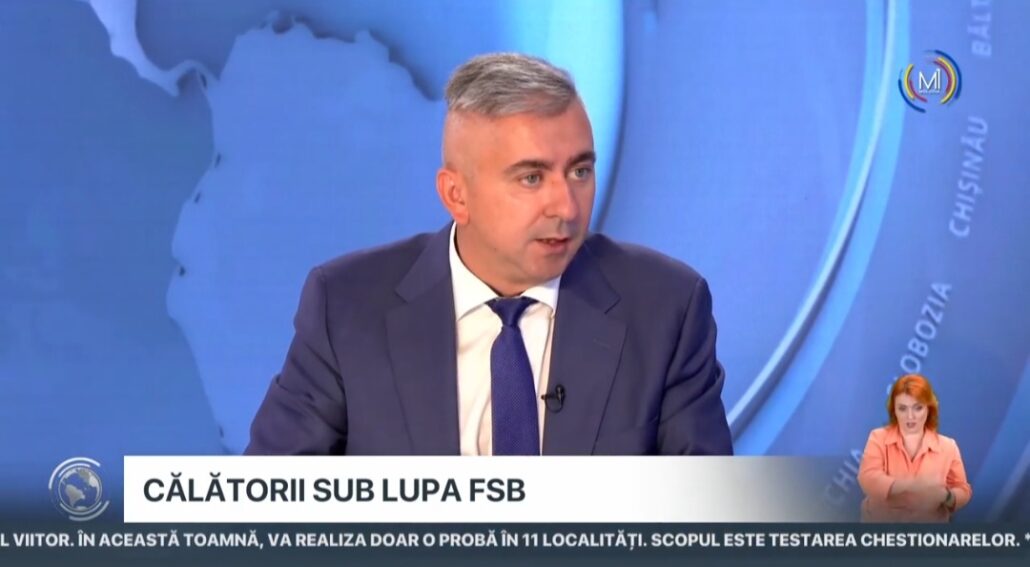
In this context, the vice-rector for Digitalization, Dinu ȚURCANU, was invited by the Moldova 1 TV channel to speak on why cyber security is a priority for the Government of the Republic of Moldova. Mr. Țurcanu also commented on the matters related to “Yandex”, after the disclosure of information regarding the company providing the FSB with data on customer movements, including from outside Russia, bringing into view the need to increase the culture of cyber security among citizens.
Taking into consideration the currently happening war and the security crisis we are facing, it is entirely expected that applications, including those of Russian companies, are causing distrust among citizens. Naturally, other applications would raise the same doubts, highlighted Mr. Țurcanu.
Just think about the apps we installed and the permissions we gave in the process, providing personal data, often clicking the ‘next’ button automatically just to speed up the installation and have our app ready for use. This way, we overlook the fact that we voluntarily have exposed ourselves to cyber attacks, allowing access to the camera, microphone, contacts, geolocation, etc. There is a need for cyber security training or awareness. The standards imply that the citizen is responsible for giving away or not certain data, says Mr. Țurcanu.
In the same context, the data storage dilemma arises. Mr. Țurcanu helps us to analyze things beyond how they appear at first glance, raising questions regarding the companies that store personal data and the level of security of their information systems.
At the same time, the vice-rector informed the viewers that any company which processes personal data must sign a contract with the National Center for Personal Data Protection, through which it becomes a sole operator of personal data processing.
Coming with practical and verified advice, Mr. Țurcanu advices us:
– to install only safe applications, which are in digitally certified stores of mobile phones;
– if you have installed a secure application, but you are asked about access to permissions such as: geolocation, microphone, camera, contacts, ask yourself if you need such an application;
– do not be tempted by the advertising of the applications, in case you have certain doubts about its security level. You can always choose the uninstall option.
Recently, in the Republic of Moldova, the cyber security law was finally voted on. This law implies that a public authority will be established, which will identify and analyze service providers, including at the government level – the critical service providers, of the critical infrastructure, and will monitor if all requirements regarding IT systems and communication networks correspond to security standards, emphasized Mr. Țurcanu.
In terms of raising awareness and forming the population’s knowledge and culture in the field of cyber security, we are unprepared, concludes the vice-rector. The good news is that, at UTM, the only “Cyber Security Academy” National Center is being built, with the support of the Future Technologies Project (Innovate Moldova), financed by USAID (USAID Moldova) and the Government of Sweden (Embassy of Sweden in Chisinau).
Thus, a government decision on this aspect is expected soon, via which training in cybersecurity will be instituted for all officials or employees of public institutions, central and local. In addition to preparing Bachelor’s, Master’s and PhD students, we will inform all employees about beginner level cyber security training courses. Given that technologies are evolving rapidly and citizens have remained untrained in this regard, unaware of the dangers, many things happen because they give their consent for data to be processed by a lot of companies, the vice-rector informed us.
Due to the lack of specialists in this field, UTM makes considerable efforts to train more IT professionals by offering programs for cyber security preparation and formation of digital skills in this field, as staff shortages and the lack of training put us at risk of incidents that happen daily.
UTM supports education for security: together for an informed and protected nation!