Genetic testing can now help identify whether a patient has an increased risk of certain diseases or how they might respond to a specific medication. The accuracy of these tests, however, depends on how well science understands the genetic variation of the population the patient belongs to. For most of the world, that data does not exist yet.
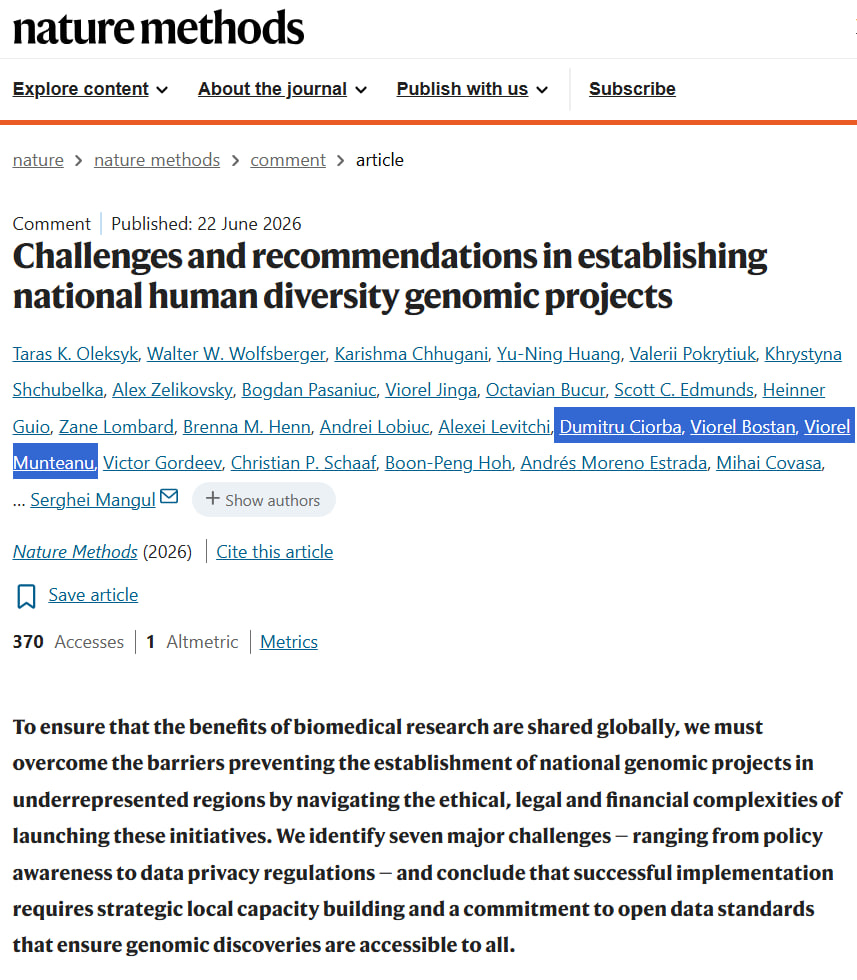
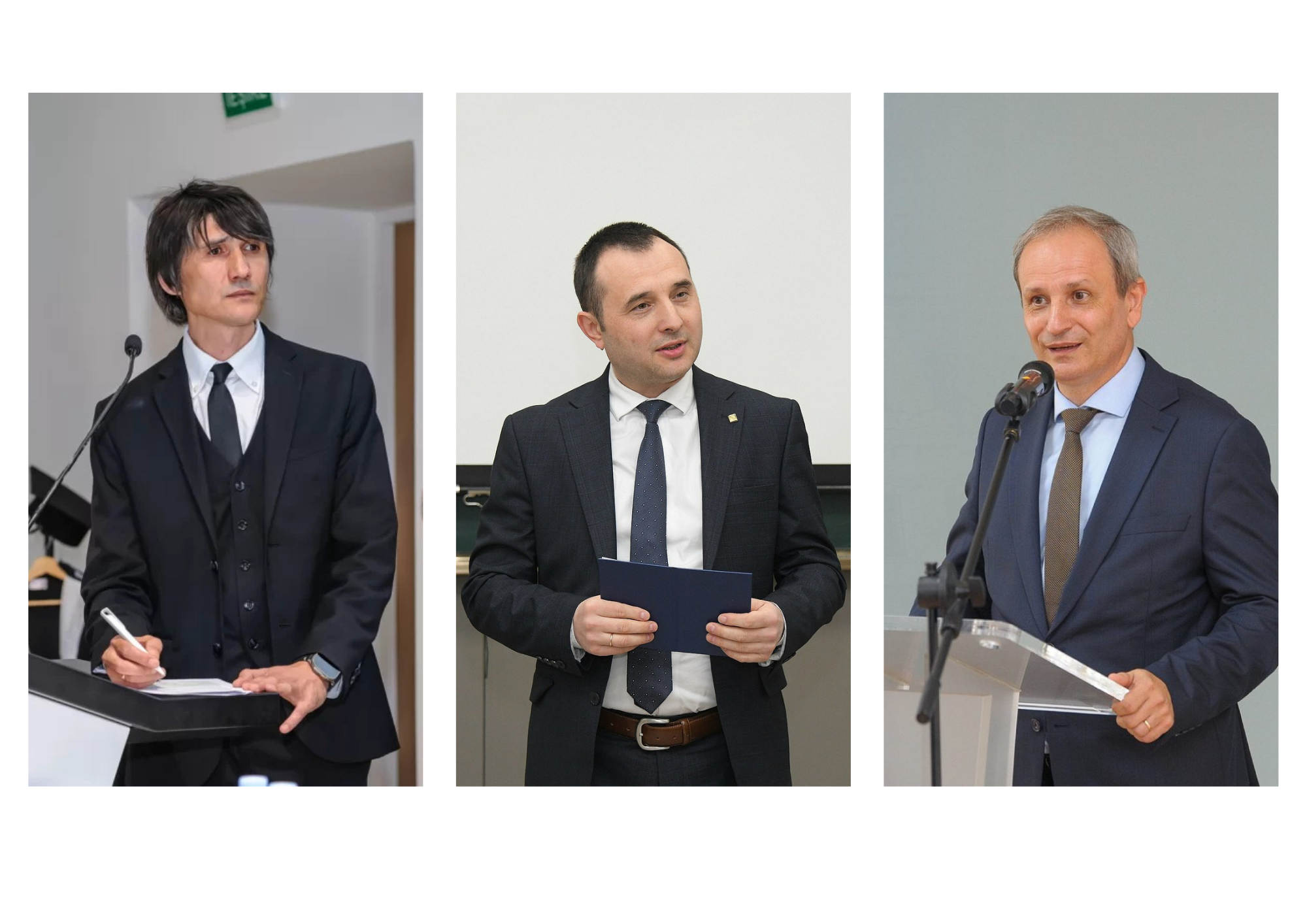
Three researchers from UTM’s Faculty of Computers, Informatics and Microelectronics, together with 38 specialists from 19 countries, examine the challenges that prevent many countries from establishing national genomic projects. In an article published in Nature Methods, Viorel Munteanu, Head of the Bioinformatics Laboratory, Viorel Bostan, Rector of UTM, and Dumitru Ciorbă, Dean of the Faculty, contribute to a set of recommendations for countries and research communities seeking to launch such initiatives.
The genomic databases used in biomedical research and medicine today are still largely based on samples from populations of European ancestry. As a result, much of the world remains underrepresented in the data that supports modern genomic research and precision medicine. The authors describe this imbalance as a “pioneer advantage”: countries that launched genomic projects earlier helped define the standards of the field and reaped most of the benefits, while others have had fewer opportunities to benefit from these advances.
Drawing on the experience of authors from 19 countries, the article identifies seven categories of challenges related to awareness, legislation, ethics, costs, funding, international partnerships and infrastructure.
The paper proposes recommendations for building genomic infrastructure through international collaboration, local capacity building and open data standards. More than an academic synthesis, it serves as a guide for the international scientific community and is aimed at supporting the responsible long-term development of national genomic projects.
“Genomics can no longer be developed in isolation. Progress depends on international collaboration, open infrastructure and the training of specialists who can turn genomic data into knowledge that is useful for society.”
- Viorel Munteanu, PhD, Head of the Bioinformatics Laboratory;
The contribution of UTM researchers was supported by a grant from the Ministry of Education and Research through CCCDI–UEFISCDI, project number PN-IV-PCB-RO-MD-2024–0303, carried out within the PNCDI IV programme.
The project was coordinated by Serghei Mangul, who leads the Computational Genomics group at the Małopolska Centre of Biotechnology, part of Jagiellonian University in Poland. The team also includes Mihai Dimian, Rector of “Ștefan cel Mare” University of Suceava. The other co-authors come from the United States, Ukraine, Kazakhstan, South Africa, South Korea, Brazil and several dozen institutions across five continents.
Nature Methods is one of the leading international scientific journals in the field of methods for the life sciences and bioinformatics. With an Impact Factor of 28.3 in 2025, the journal publishes work that helps shape the direction of biomedical research worldwide.
The full article is available on the Nature Methods website: https://doi.org/10.1038/s41592-026-03131-9.